Summary

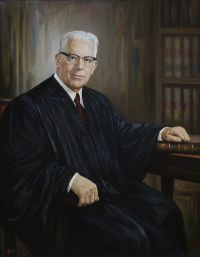
Portrait of Earl Warren Earl Warren United States v. Wise — Opinion of the Court

The Court of Appeals reversed the conviction of a corporate officer on the ground that only a corporation was a 'person' within the Act. This Court reversed the Court of Appeals, rejecting substantially the same argument that is advanced by the appellee in this case. The reason for the rejection is equally applicable to the case at bar. No intent to exculpate a corporate officer who violates the law is to be imputed to Congress without clear compulsion; else the fines established by the Sherman Act to deter crime become mere license fees for illegitimate corporate business operations.
Source: Wikisource

Portrait of Earl Warren Earl Warren United States v. Wise — Opinion of the Court

He suggests that the dearth of cases on this point reflects the belief on the part of corporate officers that, because of the identical penalties of the Clayton Act, the successful challenge to a Sherman Act indictment would be an academic victory. We cannot even attempt to evaluate the motives of individual defendants in raising or not raising defenses, even if we regarded the matter as being significant, which we do not.
Source: Wikisource

Portrait of Earl Warren Earl Warren United States v. Wise — Opinion of the Court

The appellee points to § 8 of the Sherman Act, 15 U.S.C. § 7, 15 U.S.C.A. § 7, which defines 'person' 'to include corporations and associations.' He argues that, since corporations are included within the term, individual corporate officers are thereby excluded. This is a non sequitur. The mere fact that the term is given a broad construction does not alter its basic meaning, and no such inference can be drawn from the express inclusion of corporations as 'persons.' The reason for this inclusion is readily understandable.
Source: Wikisource

Get perspective with Kwize: daily news enlightened by great literature