Summary

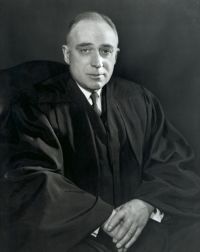
Portrait of John Marshall Harlan II John Marshall Harlan II Berra v. United States — Opinion of the Court

The Government's whole argument rests on the stark premise that Congress has left to the district attorney or the Attorney General the power to say whether the judge and jury must punish identical conduct as a felony or as a misdemeanor.
A basic principle of our criminal law is that the Government only prosecutes people for crimes under statutes passed by Congress which fairly and clearly define the conduct made criminal and the punishment which can be administered.
Source: Wikisource

Portrait of John Marshall Harlan II John Marshall Harlan II Berra v. United States — Opinion of the Court

Of course it is true that under our system Congress may vest the judge and jury with broad power to say how much punishment shall be imposed for a particular offense. But it is quite different to vest such powers in a prosecuting attorney. A judge and jury act under procedural rules carefully prescribed to protect the liberty of the individual. Their judgments and verdicts are reached after a public trial in which a defendant has the right to be represented by an attorney. No such protections are thrown around decisions by a prosecuting attorney.
Source: Wikisource

Portrait of John Marshall Harlan II John Marshall Harlan II Berra v. United States — Opinion of the Court

Substitution of the prosecutor's caprice for the adjudicatory process is an action I am not willing to attribute to Congress in the absence of clear command. Our system of justice rests on the conception of impersonality in the criminal law. This great protection to freedom is lost if the Government is right in its contention here.
Source: Wikisource

Get perspective with Kwize: daily news enlightened by great literature