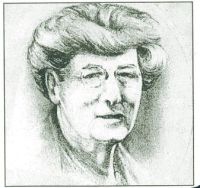
Edith Maude Hull

Edith Maude Hull

Summary

Portrait of Edith Maude Hull Edith Maude Hull The Sheik — Chapter VI (1919)

She who had been proud Diana Mayo and now—the mistress of an Arab Sheik? She laid her face on her knees with a shudder. The ordeal before her cut like a knife into her heart. The pride that Ahmed Ben Hassan had not yet killed flamed up and racked her with humiliation and shame, the shame that still seared her soul like a hot iron, so that there were moments she could not bear even the presence of the man who had made her what she was, in spite of the love she bore him, and, pleading fever, prayed to be alone.
Source: Wikisource

Portrait of Edith Maude Hull Edith Maude Hull The Sheik — Chapter VI (1919)

That had been relief and the affection of a man for a valued servant, this was the deep affection of a man for the one chosen friend, the love passing the love of women. And the jealousy she had felt in the morning welled up uncontrollably. She looked from the Sheik to the man who was absorbing all his attention, but in his pale, clever face, half hidden by the close beard, she saw no trace of the conceited, smirking egotist she had imagined, and his voice, as low as the Sheik's, but more animated, was not the voice of a man unduly elated or conscious of himself.
Source: Wikisource

Portrait of Edith Maude Hull Edith Maude Hull The Sheik — Chapter VI (1919)

She longed so desperately for happiness, and she loved him so passionately, so utterly, that she was content to give up everything to his will. If she could only get back the man of the last few weeks, if she had not angered him too far. She was at his feet, tamed thoroughly at last, all her proud, angry self-will swamped in the love that was consuming her with an intensity that was an agony. Love was a bitter pain, a torment that was almost unendurable, a happiness that mocked her with its hollowness, a misery that tortured her with visions of what might have been.
Source: Wikisource

Get perspective with Kwize: daily news enlightened by great literature