Summary

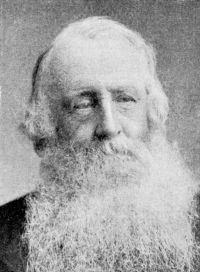
Portrait of Edward A. Freeman Edward A. Freeman History of the Cathedral Church of Wells

The cloister cannot measure itself with Gloucester or Salisbury; the chapter-house lacks the soaring roofs of York and Lincoln; the palace itself finds its rival in the ruined pile of Saint David's. The peculiar charm and glory of Wells lies in the union and harmonious grouping of all. The church does not stand alone; it is neither crowded by incongruous buildings, nor yet isolated from those buildings which are its natural and necessary complement. Palace, cloister, Lady chapel, choir, chapter-house, all join to form one indivisible whole.
Source: Gutenberg

Portrait of Edward A. Freeman Edward A. Freeman History of the Cathedral Church of Wells

To the north of the old British monastery, not alone on an island, but nestling under the shadow of the great hill range itself, the younger ecclesiastical foundation, the foundation of the conquerors, was growing up. Of purely English and Christian origin, claiming no Roman or British forerunner, the church and town which were rising at the foot of Mendip drew their name from no legend of old times, from no tradition of gods and heroes, but from the most marked natural feature of the spot and from the patron saint in whose name the young foundation was hallowed.
Source: Gutenberg

Portrait of Edward A. Freeman Edward A. Freeman History of the Cathedral Church of Wells

While the origin of the Abbey is lost in the gloom of hoariest antiquity, while its name of Avalon has become a name of legend, a name rather of some fancied fairy-land than of an actual spot of earth, no traditions, no legends, have decorated the birth and early years of the church and city which drew its name, as intelligible to English ears now as it was then, from the holy wells of Saint Andrew.
Source: Gutenberg

Get perspective with Kwize: daily news enlightened by great literature