Summary

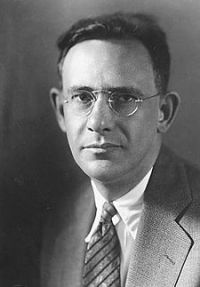
Portrait of Edward Sapir Edward Sapir Review of Moseteno Vocabulary and Treatises (1918)

While examining the different packages in order to make a preliminary selection of the papers according to the subjects treated in them, I found Bibolotti’s manuscript dealing with the Moseteno language. The unexpected discovery is all the more important since it concerns extensive materials gathered together by a yet unknown author of a relatively little studied Bolivian aboriginal idiom spoken by Indians who have almost vanished.
Source: Wikisource

Portrait of Edward Sapir Edward Sapir Review of Moseteno Vocabulary and Treatises (1918)

The curiously widespread American second person singular in m- meets us here once more (mi “thou”) . Pronouns are not welded with the verb stem, but occur independently (e.g., ye queti “I plant”) . A considerable number of verbal suffixes have been isolated by Dr. Schuller, but more intensive study of Moseteno, at first hand, if possible, is needed to make clear their functions. Phonetically, Moseteno would seem to be “far from agreeable to the ear;” it has many “clusters of totally heterogeneous consonants.”
Source: Wikisource

Portrait of Edward Sapir Edward Sapir Review of Moseteno Vocabulary and Treatises (1918)

Schuller, “the habitat of the Moseteno-Chumano embraced the mountainous regions to the east of the Beni, more or less between 15° and 16° south latitude, and 69° to 71° longitude west of Paris. Their eastern neighbors were the Yurucaré; in the north they reached as far as the territories occupied by Mobima and Moxo, or Mojo, tribes, and in the northwest they touched Tacana and Leco speaking peoples. The natural border to the south and the west is the range of the higher Andes.”
Source: Wikisource

Get perspective with Kwize: daily news enlightened by great literature