Summary

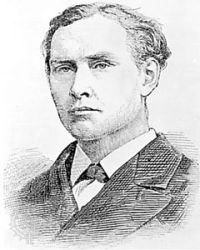
Portrait of Edward Whymper Edward Whymper Scrambles amongst the Alps — Chapter 7 (1871)

The bad weather was evidently confined to the Mont Cervin, for when the clouds lifted we could see everything that could be seen from our gîte. Monte Viso, a hundred miles off, was clear, and the sun set gorgeously behind the range of Mont Blanc. We passed the night comfortably—even luxuriously—in our blanket-bags, but there was little chance of sleeping, between the noise of the wind, of the thunder, and of the falling-rocks. I forgave the thunder for the sake of the lightning. A more splendid spectacle than its illumination of the Matterhorn crags I do not expect to see.
Source: Wikisource

Portrait of Edward Whymper Edward Whymper Scrambles amongst the Alps — Chapter 7 (1871)

I conceive that we should look to differences of temperature rather than to the height or isolation of the mountain for an explanation. I am inclined to attribute the disturbances which occur in the atmosphere of the southern sides of the Matterhorn on fine days, [8] principally to the fact that the mountain is a rock mountain; that it receives a great amount of heat, [9] and is not only warmer itself, but is surrounded by an atmosphere of a higher temperature than such peaks as the Weisshorn and the Lyskamm, which are eminently snow mountains.
Source: Wikisource

Portrait of Edward Whymper Edward Whymper Scrambles amongst the Alps — Chapter 7 (1871)

Why is it that the Matterhorn is subject to these abominable variations of weather? The ready answer is, "Oh, the mountain is so isolated; it attracts the clouds." This is not a sufficient answer. Although the mountain is isolated, it is not so much more isolated than the neighbouring peaks that it should gather clouds when none of the others do so.
Source: Wikisource

Get perspective with Kwize: daily news enlightened by great literature