Summary

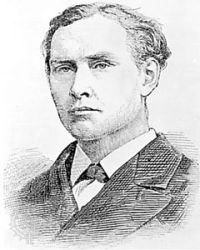
Portrait of Edward Whymper Edward Whymper Scrambles amongst the Alps — Chapter 5 (1871)

I had started from Breil without provisions, or telling Favre—the innkeeper, who was accustomed to my erratic ways—where I was going. I returned to the view. The sun was setting, and its rosy rays, blending with the snowy blue, had thrown a pale, pure violet far as the eye could see; the valleys were drowned in a purple gloom, while the summits shone with unnatural brightness: and as I sat in the door of the tent, and watched the twilight change to darkness, the earth seemed to become less earthy and almost sublime; the world seemed dead, and I, its sole inhabitant.
Source: Wikisource

Portrait of Edward Whymper Edward Whymper Scrambles amongst the Alps — Chapter 5 (1871)

It may be remarked parenthetically that the term foolhardiness is frequently used rather loosely in regard to accidents which occur in the Alps. The mere fact that a man loses his life, or sustains injury, whether it be on the mountains or elsewhere, is no proof that he was foolhardy; and upon reviewing those accidents which have happened in late years, it seems to me that to the major part the word is inapplicable. If anything is undertaken for sport which there is good reason to suppose must fail, or will probably be fatal to life, that may be considered foolhardy.
Source: Wikisource

Portrait of Edward Whymper Edward Whymper Scrambles amongst the Alps — Chapter 5 (1871)

I expect that any intelligent critic will inquire, "But do you really mean to assert that dangers in mountaineering arise only from superlative difficulty; and that the perfect mountaineer does not run any risks?" I am not prepared to go quite so far as this, although there is only one risk to which the scrambler on the Higher Alps is unavoidably subject, which does not occur to pedestrians in London's streets.
Source: Wikisource

Get perspective with Kwize: daily news enlightened by great literature