 Thomas Paine,
The Writings of Thomas Paine, Complete
Thomas Paine,
The Writings of Thomas Paine, Complete
“ When it becomes necessary to do anything, the whole heart and soul should go into the measure, or not attempt it. ”
The concept of attempt signifies a purposeful effort to attain a goal, often involving risk, perseverance, or mental engagement. From philosophical exploration to practical application, writers have examined its subtleties: Thomas Paine associated it with wholehearted dedication, while George Edward Moore emphasized its capacity to address philosophical conflicts.
Arnold Haultain depicted attempts as pointless yet essential encounters with the infinite, and John Dewey tied it to the concrete process of planning and carrying out actions. Legal documents, such as Singapore’s Police Force Act, also define attempts as actionable intentions. Across various fields, the theme highlights the relationship between aspiration and reality, illustrating how effort—whether intellectual, imaginative, or practical—shapes human action.
Thomas Paine,
The Writings of Thomas Paine, Complete
“ When it becomes necessary to do anything, the whole heart and soul should go into the measure, or not attempt it. ”
 George Edward Moore,
Principia Ethica — Preface
(1903)
George Edward Moore,
Principia Ethica — Preface
(1903)
“ But I am inclined to think that in many cases a resolute attempt would be sufficient to ensure success; so that, if only this attempt were made, many of the most glaring difficulties and disagreements in philosophy would disappear. At all events, philosophers seem, in general, not to make the attempt ”
 James Anthony Froude,
Short Studies on Great Subjects
James Anthony Froude,
Short Studies on Great Subjects
“ We refuse to submit to the demonstrations by which it thrusts itself upon our reception; but regarding it as a whole, as an attempt to explain the nature of the world of which we are a part, we can still ask ourselves how far the attempt is successful. ”
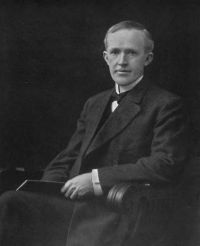 Samuel McChord Crothers,
By the Christmas Fire
Samuel McChord Crothers,
By the Christmas Fire
“ All this is an excellent preparation for the twenty-first attempt, which may possibly reveal the way it can be done. When thousands of good heads are working upon a problem in this fashion, something happens. ”
 Bram Stoker,
Personal reminiscences of Henry Irving
(1906)
Bram Stoker,
Personal reminiscences of Henry Irving
(1906)
“ Such exposition demands mind, and the exercise of mind; we may, I think, take it that intention requires intellectual effort both for its conception and execution—the wish and the attempt to turn desire into force. ”
John Chilton Scammell, The Library of Entertainment: Handbook
“ At this time, too, interest is stirred to attempt an understanding of the 'reason for things'—the mind endeavors to arrive at some law or principle beneath the varied course of life and action in the world. ”
Arnold Haultain, Of Walks and Walking Tours: An Attempt to find a Philosophy and a Creed
“ A profound silence pervaded them, a silence so intense, so all-embracing, it seemed to overflow the forest, to go out into space, to enwrap the world in its grasp. Not a thing stirs. To be alive in that shrine of death-like soundlessness seems desecration. It is supreme, infinite, absolute; you, the living, moving onlooker, are finite and relative, a thing of time and space. To think is to disturb the serenity of its repose, for to think is to attempt to limit it, to reduce it to the level of yourself, and no thought is large enough to compass it. ”
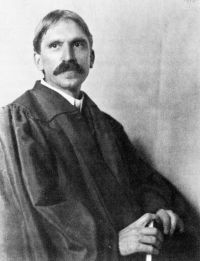 John Dewey,
The school and society
(1899)
John Dewey,
The school and society
(1899)
“ But when he attempts to realize his impulse, it is a question of making his idea definite, making it into a plan, of taking the right kind of wood, measuring the parts needed, giving them the necessary proportions, etc. ”
Parliament of Singapore, Police Force Act 2004 (Now Cap… (2004)
“ Any person charged with attempting to commit a service offence may be convicted or found guilty of the attempt even though the evidence in the proceedings proves that the person committed the offence. ”
Samuel Smiles, Self Help; with Illustrations of Conduct and Perseverance
“ and the reason why so little is done, is generally because so little is attempted. ”
 Ernest Renan,
Recollections of My Youth
(1863)
Ernest Renan,
Recollections of My Youth
(1863)
“ Sight and sight again the aim which thou hast failed to hit throughout the ages; try to struggle through the scarcely perceptible opening which leads to another firmament. Thou hast the infinity of time and space to try the experiment. He who can commit blunders with impunity is always certain to succeed. ”
William James, Psychology: Briefer Course
“ What the heave of the will betokens metaphysically, what the effort might lead us to infer about a will-power distinct from motives, are not matters that concern us yet. Subjectively and phenomenally, the feeling of effort, absent from the former decisions, accompanies these. ”
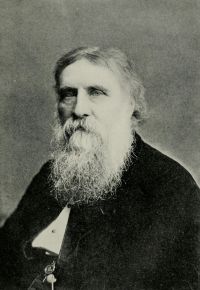 George MacDonald,
The Flight of the Shadow
George MacDonald,
The Flight of the Shadow
“ The logical discussion of a thing that has to be done, a thing awaiting action and not decision—the experiment, that is, whether the duty or the temptation has the more to say for itself, is one of the straight roads to the pit. ”
 Josiah Royce,
The Conception of God
(1897)
Josiah Royce,
The Conception of God
(1897)
“ Hence, — and here, indeed, is the conclusion of the whole matter, — the very effort hypothetically to assert that the whole world of experience is a world of fragmentary and finite experience is an effort involving a contradiction. ”
Josiah Royce,
The Sources of Religious Insight
“ First, then, there are certain respects in which I fully agree with recent pragmatism. I agree that every opinion expresses an attitude of the will, a preparedness for action, a determination to guide a plan of action in accordance with an idea. Whoever asserts anything about the way out of the woods, or about the cause and possible cure of a toothache, defines a course of action in accordance with some purpose, and amongst other things predicts the {146} possible outcome of that course of action. ”
Ralcy Husted Bell, The Mystery of Words (1924)
“ There must be effort back of the stimulus to initiate it; and back of the effort there must be purpose; and back of all there must be will-power to stabilize and to make continuous the purpose in a series of intelligent efforts. The detached question of will, imagination, and personality, is quite another matter. ”
William James, The Principles of Psychology, Volume 2…
“ We, however, call the more abundant mass of ideas ourselves; and, talking of its effort as our effort, and of that of the smaller mass of ideas as the resistance, [500] we say that our effort sometimes overcomes the resistances offered by the inertias of an obstructed, and sometimes [Pg 576] those presented by the impulsions of an explosive, will. Really both effort and resistance are ours, and the identification of our self with one of these factors is an illusion and a trick of speech. ”
 Henry David Thoreau,
Walden, and On The Duty Of Civil Disobedience
Henry David Thoreau,
Walden, and On The Duty Of Civil Disobedience
“ I learned this, at least, by my experiment; that if one advances confidently in the direction of his dreams, and endeavors to live the life which he has imagined, he will meet with a success unexpected in common hours. ”
 Orison Swett Marden,
Pushing to the Front
Orison Swett Marden,
Pushing to the Front
“ Had the angels been consulted, whether to create man, with this principle introduced, that, if a man did a thing once, if would be easier the second time, and at length would be done without effort, they would have said, "Create!" ”
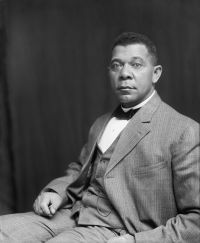 Booker T. Washington,
Character Building
Booker T. Washington,
Character Building
“ Such questions as these can be satisfactorily answered not merely by our putting our consciences into every effort, no matter what the effort may be, but by improving, day by day, upon what has been done the day before. ”
Various, Graham's Magazine, Vol. XL, No…
“ The process I allude to is that of making, as it were, a summary of all the acts and events, which have occurred within a certain period of the past, trying them by the test of reason and of conscience, and endeavoring to clear away all the mists of passion, prejudice, and error which crowd round man and obscure his sight in the moment of exertion or pursuit. ”
William James, Essays in Radical Empiricism
“ But in this actual world of ours, as it is given, a part at least of the activity comes with definite direction; it comes with desire and sense of goal; it comes complicated with resistances which it overcomes or succumbs to, and with the efforts which the feeling of resistance so often provokes; and it is in complex experiences like these that the notions of distinct agents, and of passivity as opposed to activity arise. ”
J. H. Gardiner, The Making of Arguments
“ But in all your preparation think beyond the special debate you are preparing for. What you are or should be aiming at is habit—the instinctive, spontaneous execution of rules which you have forgotten. When the habit is established you can let all these questions of voice, of attitude, of gesture, drop from your mind, and give your whole attention to the ideas you are developing, and the language in which you shall clothe them. ”
Edmund Morris, Ten Acres Enough
“ It is possible that I may sink the practical in the enthusiastic, and prove myself to be unduly enamored of my choice. But as it is success that makes the hero, so let my experience be accepted as the test. ”
 John Ruskin,
The Crown of Wild Olive
John Ruskin,
The Crown of Wild Olive
“ Still, whatever skill you may reach, there will always be need of judgment to choose, and of speed to seize, certain things that are principal or fugitive; and you must give more and more effort daily to the observance of characteristic points, and the attainment of concise methods. ”
John Ruskin,
The Pleasures of England
(1888)
“ Are any of you willing, simply as a philosophical experiment in the greatest of sciences, to adopt the principles and feelings of these men of a thousand years ago for a given time, say for a year? It cannot possibly do you any harm to try, and you cannot possibly learn what is true in these things, without trying. ”
 Gerard Manley Hopkins,
Poems of Gerard Manley Hopkins
Gerard Manley Hopkins,
Poems of Gerard Manley Hopkins
“ Now since those who study style in itself must allow a proper place to the emphatic expression, this experiment, which supplies as novel examples of success as of failure, should be full of interest; and such interest will promote tolerance. ”
 Richard Francis Burton,
The Sentiment of the Sword — The Third Evening
Richard Francis Burton,
The Sentiment of the Sword — The Third Evening
“ When sufficient practice shall have made these movements familiar to you, when you feel the ease and rapidity which result from them, and when you are conscious that they have given, with the patience of assured strength, a new life to your thews and sinews, then you have a right to venture upon certain modifications. ”
W. Tudor Jones, An Interpretation of Rudolf Eucken's Philosophy
“ In modern times—in the various forms of Idealism and Pragmatism—such a need of getting at the core of being and of being convinced that the effort is worth while, has been emphasised again and again. "Launch yourselves with as strong and decided an initiative as possible. ”
Jennie J. Young, The Ceramic Art
“ We have endeavored to put in words rather the common aim of all, than a rule by which to measure individual endeavor. It does not follow that all efforts are equal. Some have approached the common object by one route, and others by another, and some have approached it nearer than others ”
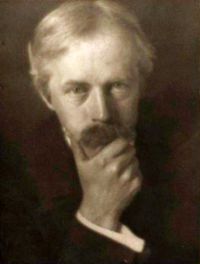 Arthur Symons,
The Symbolist Movement in Literature
Arthur Symons,
The Symbolist Movement in Literature
“ Every step is taken deliberately, is weighed, approved, condemned, viewed from this side and from that, and at the same time one feels behind all this reasoning an impulsion urging a soul onward against its will. ”
William James, Talks To Teachers On Psychology…
“ Our volitional habits depend, then, first, on what the stock of ideas is which we have; and, second, on the habitual coupling of the several ideas with action or inaction respectively. How is it when an alternative is presented to you for choice, and you are uncertain what you ought to do? ”
William Edward Shepard, The Palm Tree Blessing
“ So my feet have been in almost continual training. I have never found a task too hard to undertake nor too tedious to finish, and no one appreciates the truth of the old saying, 'Where there's a will, there's a way,' better than I do. ”
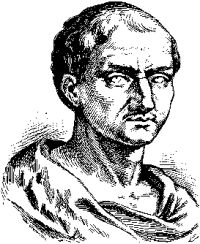 Anicius Manlius Severinus Boethius,
The Consolation of Philosophy
(1897)
Anicius Manlius Severinus Boethius,
The Consolation of Philosophy
(1897)
“ However, to win ampler credence for my conclusion, I will pursue both paths, and draw confirmation for my statements first in one way and then in the other.'The carrying out of any human action depends upon two things—to wit, will and power; if either be wanting, nothing can be accomplished. ”
Henry Ware, Hints on extemporaneous preaching
“ He should select for this exercise those subjects in which he feels an interest at the time, and in regard to which he desires to engage the interest of others. In order to the best success, extemporaneous efforts should be made in an excited state, when the mind is burning and glowing, and longs to find vent. ”
 Georg Wilhelm Friedrich Hegel,
The Philosophy of Fine Art, volume 4…
Georg Wilhelm Friedrich Hegel,
The Philosophy of Fine Art, volume 4…
“ Action is here the executed will, which as such is at the same time recognized, recognized, that is, not merely in its origin and point of departure from the soul-life, but also in respect to its ultimate purpose. ”
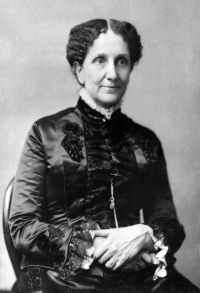 Mary Baker Glover,
Science and Health
(1875)
Mary Baker Glover,
Science and Health
(1875)
“ Observation and experience teach us, those scorning to swerve from a direct line of duty, or vainly to stoop to personal aggrandizement at the sacrifice of conscience, and make popularity paramount to Truth, are traduced by many whom that line of duty touches. ”
Frank E. Miller, The Voice: Its Production, Care and Preservation
“ Once acquired, method is merged into habit and habit into seeming instinct—that is to say, it becomes method, responding so spontaneously to the slightest suggestion of the will, that only the perfected result of it is apparent to the listener. ”
Charlotte M. Mason, Home education (1906)
“ It is by doing, that we learn to do; by overcoming, that we learn to overcome; and every right act which we cause to spring out of pure principles, whether by authority, precept, or example, will have a greater weight in the formation of character than all the theory in the world. ”
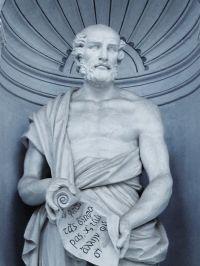 Theophrastus,
Theophrastus's History of Stones
(1774)
Theophrastus,
Theophrastus's History of Stones
(1774)
“ Let others therefore freely repeat these my Experiments, and add more of their own; and with an honest Freedom tell the Result of all: My single Attention can only make a few Experiments, where true Knowledge demands a thousand: But the Result of different Trials will bring forth Truth. ”
William Rounseville Alger, The Destiny of the Soul: A Critical History of the Doctrine of a Future Life
“ A recent able author speaks of "that congeries of organs whose union forms the brain and whose action constitutes the mind." 10 The mind, then, is an action! Can an action love and hate, choose and resolve, rejoice and grieve, remember, repent, and pray? Is not an agent necessary for an action? ”
vicomte de Eugène-Melchior Vogüé, The Russian novelists (1887)
“ To be able to judge of the respective merit of the two methods, we must interrogate one of the fundamental laws of our being. Is there any pleasure worth having which does not cost some little trouble? Do we not prefer what we have acquired 228 by an effort all our own? ”
Nicolas August Ludwig Jacob Johannsen, Popular Science Monthly (1875)
“ I cannot forbear here to point out, further, that the truth in regard to mental discipline appears to be a universal truth or law of human activity, perhaps of all activity. Discipline is an incidental result of right exercise. ”
 Woodrow Wilson,
On Being Human
Woodrow Wilson,
On Being Human
“ Do its many interests distract us when we would plan our discipline, determine our duty, clarify our ideals? It is the more necessary that we should ask ourselves what it is that is demanded of us, if we would fit our qualities to meet the new tests. ”
 Vernon Lee,
Laurus Nobilis: Chapters on Art and Life
Vernon Lee,
Laurus Nobilis: Chapters on Art and Life
“ Moreover, in those gropings among looming or unseen obstacles, we are pulled hither and thither, checked and misled by the recurring doubt as to which, of these thwarted and yielding selves, may be the chief and real one, and which, of the goals we are never allowed finally to touch, is the goal we spontaneously tend to. ”
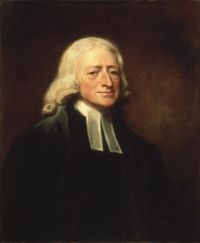 John Wesley,
The works of the Rev. John Wesley…
(1771)
John Wesley,
The works of the Rev. John Wesley…
(1771)
“ If we would have our resolutions take effect, we must take heed unto our ways, set a watch before the door of our lips, and examine the motions that arise in our heart, whence they come, and whither they go; whether it be pride or passion, or any corrupt humour, that prompteth us to any design, and whether God will be pleased with it? ”
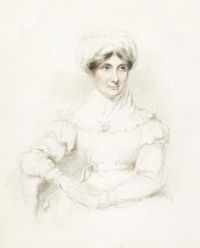 Joanna Baillie,
A Series of Plays in which it is intended to delineate The Stronger Passions of the Mind
(1798)
Joanna Baillie,
A Series of Plays in which it is intended to delineate The Stronger Passions of the Mind
(1798)
“ We find in its varied scenes an exercise of the mind analogous to that which we all, less or more, find out for ourselves, amidst the mixed groupes of people whom we meet with in society; and which I have already mentioned as an exercise universally pleasing to man. ”
William James, The Principles of Psychology, Volume 2…
“ It is deliberately driving a thorn into one's flesh; and the sense of inward effort with which the act is accompanied is an element which sets the fourth type of decision in strong contrast with the previous three varieties, and makes of it an altogether peculiar sort of mental phenomenon. ”
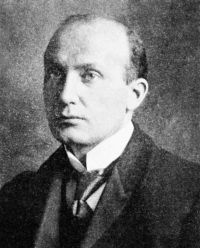 Robert Sessions Woodworth,
Psychology
Robert Sessions Woodworth,
Psychology
“ At other times, without such a distinct "act of will", and without any observable change in the attractiveness of either alternative, we simply find, after awhile, that a decision has emerged, and that we now know what we are going to do. ”
Paul Klapper, College Teaching
“ That when we wish to try something new, let's go back and see if it has not been tried before, study the circumstances, the mistakes made, the results attained, and see whether we can't profit by the experience given us by the past. ”
