“ We behold, as we survey the episodes of this first act of a sublime drama, the figure of its Master Hero, the Báb, arise meteor-like above the horizon of Shíráz, traverse the sombre sky of Persia from south to north, decline with tragic swiftness, and perish in a blaze of glory. We see His satellites, a galaxy of God-intoxicated heroes, mount above that same horizon, irradiate that same incandescent light, burn themselves out with that self-same swiftness, and impart in their turn an added impetus to the steadily gathering momentum of God’s nascent Faith. ”
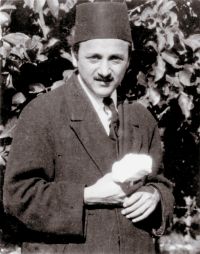
Effendi Shoghi
Summary
"God Passes By," written by Effendi Shoghi, is a historical account detailing the early development of the Bahá'í Faith, with a focus on the martyrdom of the Báb and the suffering endured by its initial adherents in 19th-century Persia. The text explores the challenges faced by prominent individuals such as Bahá’u’lláh, Táhirih, and Siyyid Ḥusayn, emphasizing themes of sacrifice, banishment, and the perseverance of a newly emerging community.
Through compelling narratives of exile, spiritual struggle, and the rise of a new religious movement, Shoghi illustrates the power of faith in the face of hardship. The work, which forms part of a larger collection of Bahá'í historical texts, brings together the sacrifices and achievements that established the groundwork for the Faith’s worldwide growth.
Quotes from God Passes By (Effendi Shoghi)
“ The storm which subsequently burst, with unexampled violence, on a community already beaten to its knees, had, moreover, robbed it of its greatest heroine, the incomparable Táhirih, still in the full tide of her victories, had sealed the doom of Siyyid Ḥusayn, the Báb’s trusted amanuensis and chosen repository of His last wishes, had laid low Mullá ‘Abdu’l-Karím-i-Qazvíní, admittedly one of the very few who could claim to possess a profound knowledge of the origins of the Faith, and had plunged into a dungeon Bahá’u’lláh, the sole survivor among the towering figures of the new Dispensation. ”
“ The torrents of blood that poured out during those crowded and calamitous years may be regarded as constituting the fertile seeds of that World Order which a swiftly succeeding and still greater Revelation was to proclaim and establish. The tributes paid the noble army of the heroes, saints and martyrs of that Primitive Age, by friend and foe alike, from Bahá’u’lláh Himself down to the most disinterested observers in distant lands, and from the moment of its birth until the present day, bear imperishable witness to the glory of the deeds that immortalize that Age. ”
