Summary

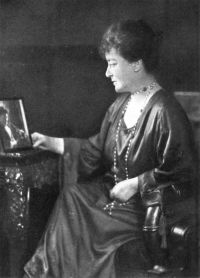
Portrait of Eliza Davis Aria Eliza Davis Aria Costume: Fanciful, Historical, and Theatrical… (1906)

Women had indeed to suffer in those days to attain what they were pleased to call the beautiful, and it is quite a relief to remember the moment when Marie Antoinette took a sudden caprice to appear without hoops in a soft satin gown with wide sleeves, which set the fashion in London as well as in France. For a short time only, however, such moderation ruled, and the hoops came back larger than ever in 1784, when the Duchess of Cumberland swept the floor in five yards of brocade, and a stomacher blazing stiffly with jewels.
Source: Wikisource

Portrait of Eliza Davis Aria Eliza Davis Aria Costume: Fanciful, Historical, and Theatrical… (1906)

The hats were worn rather far back to show these curls, and many had long ends of ribbon hanging down at the back, and others had low crowns and wide brims trimmed with flowers. What was known as a "fly" cap was a large butterfly edged with jewels, and crownless hats became the fashion; invented so as not to spoil the high coiffure, they boasted nothing but brim, and were delegated to do duty only in the finest weather.
Source: Wikisource

Portrait of Eliza Davis Aria Eliza Davis Aria Costume: Fanciful, Historical, and Theatrical… (1906)

The former luckless lady will ever be associated with that coif which is pointed in the front, and curves at either side, while the latter stands eternal sponsor to the rolled coiffure which turns back from the face over a high pad. There may perhaps be other glories better worth attainment, but nobody respectfully imbued with the importance of dress can venture to assert that these ladies lived in vain.
And in a minor degree their privilege has been shared by others. The art of Gainsborough and of Watteau has immortalised a hat, a pleat, and a flowered sac
Source: Wikisource

Get perspective with Kwize: daily news enlightened by great literature