Summary

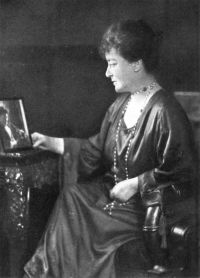
Portrait of Eliza Davis Aria Eliza Davis Aria Costume: Fanciful, Historical, and Theatrical… (1906)

OF MATERIALS, THE CORSET, AND THE CRINOLINE
The material question seems to have been answered in every country save England, where the initiative in manufacture is conspicuous by its absence, though we have through the centuries so successfully begged, borrowed, stolen, or acquired an expert knowledge of the various textile arts, that every manufactured fabric is now grist which may come from our mill.
Source: Wikisource

Portrait of Eliza Davis Aria Eliza Davis Aria Costume: Fanciful, Historical, and Theatrical… (1906)

The Commonwealth greatly affected the manufacture of lace in England, though some of the most rigid Puritans continued to wear Flanders lace, and the dead body of the Protector was "robed in purple velvet, ermine, and richest Flanders lace"—not so bad for the simple cerements of the greatest socialist who ever lived! The passion for wearing lace reached its height in England in the reign of William and Mary, when lace was indispensable to the most exalted wearers of the commodes, and its influence was essential on the full cravats and ruffles.
Source: Wikisource

Portrait of Eliza Davis Aria Eliza Davis Aria Costume: Fanciful, Historical, and Theatrical… (1906)

But, after all, woollen cloth is dull stuff, and the first on the list of fabrics aiming at the beautiful is cloth of gold, which made its bid for fame in the days of Richard II., whose patronage of the luxury was, however, mild in comparison with that of that past master in the art of prodigality, Henry VIII., who is said to have had as many as twenty-five suits of cloth of gold, securing it at a price of 40s.
Source: Wikisource

Get perspective with Kwize: daily news enlightened by great literature