Summary

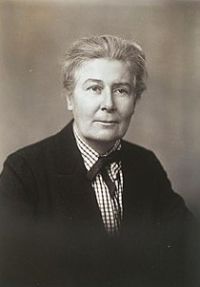
Portrait of Ellen N. La Motte Ellen N. La Motte The Tuberculosis Nurse: Her Function and Her Qualifications (1915)

Never for a moment should home supervision be considered a satisfactory substitute for hospital accommodation. The nurse’s efforts, no matter how thorough and conscientious, can never entirely remove the danger. Her care often lessens it to a marked degree, but never absolutely eliminates it. It is at best a makeshift, a stopgap—better than nothing, often much better than nothing, but never for a moment the proper alternative to removing the patient from his home. No one knows better than the nurse herself the inadequacy, the futility, of even the closest supervision.
Source: Gutenberg

Portrait of Ellen N. La Motte Ellen N. La Motte The Tuberculosis Nurse: Her Function and Her Qualifications (1915)

If, on the contrary, the physician is one who exploits his patients, who keeps the nature of the disease hidden, whether through ignorance or design, and fails to give proper instruction as to its infectiousness, then we must look for nothing but opposition and antagonism. We must hear objections as to the nurse’s interference, to her uniform, to her tactlessness, to her scaring the patient to death—and we must consider the motives which underlie them.
Source: Gutenberg

Portrait of Ellen N. La Motte Ellen N. La Motte The Tuberculosis Nurse: Her Function and Her Qualifications (1915)

As public health nurses we cannot but object that the last word on so serious a disease should be said by men whose diagnoses we distrust. That the health of the community should be endangered by even a few physicians of this sort,—either ignorant, or dishonest, or both,—is grave commentary upon the medical ethics of the day. It is a severe criticism on that “professional courtesy” which forbids intervention, even by the health authorities, with a physician who drives his trade at the community’s expense.
Source: Gutenberg

Get perspective with Kwize: daily news enlightened by great literature