Summary

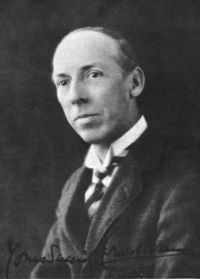
Portrait of Ernest Bramah Ernest Bramah Max Carrados — The Knight’s Cross Signal Problem (1914)

That does not suit us, Mr Drishna.”
“And how do you propose to prevent it?” asked Drishna, with cool assurance.
“It is very unpleasant being hanged on a dark winter morning; very cold, very friendless, very inhuman. The long trial, the solitude and the confinement, the thoughts of the long sleepless night before, the hangman and the pinioning and the noosing of the rope, are apt to prey on the imagination. Only a very stupid man can take hanging easily.”
“What do you want me to do instead, Mr Carrados?” asked Drishna shrewdly.
Source: Wikisource

Portrait of Ernest Bramah Ernest Bramah Max Carrados — The Knight’s Cross Signal Problem (1914)

It may have been that, but my idea is rather that probably it was neither quite pure accident nor pure design. I can imagine Mead meanly pluming himself over the fact that the life of this man who stands in his way, and whom he must cordially dislike, lies in his power. I can imagine the idea becoming an obsession as he dwells on it. A dozen times with his hand on the lever he lets his mind explore the possibilities of a moment’s defection. Then one day he pulls the signal off in sheer bravado—and hastily puts it at danger again.
Source: Wikisource

Portrait of Ernest Bramah Ernest Bramah Max Carrados — The Knight’s Cross Signal Problem (1914)

Hutchins laughed his wry contempt.
“Mr Carlyle!” he reiterated; “Mr Carlyle! Fat lot of good he’s been. Why don’t he do something for his money?”
“He has,” replied Carrados, with imperturbable good-humour; “he has sent me. Now, I want to ask you a few questions.”
“A few questions!” roared the irate man. “Why, blast it, I have done nothing else but answer questions for a month. I didn’t pay Mr Carlyle to ask me questions; I can get enough of that for nixes. Why don’t you go and ask Mr Herbert Ananias Mead your few questions—then you might find out something.”
Source: Wikisource

Get perspective with Kwize: daily news enlightened by great literature