Summary

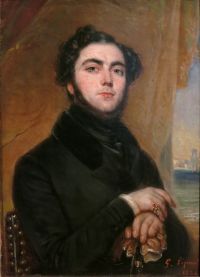
Portrait of Eugène Sue Eugène Sue The Wandering Jew — Volume 04

I will obey!' said I within myself. 'Gabriel is like my own child; but he is also a priest, a martyr—almost a saint. If any one in the world imitates the charity of our blessed Saviour, it is surely he. When I leave this prison, I will go and consult him and he will clear up my doubts.'"
"You are right, dear mother," cried Agricola; "it was a thought from heaven. Gabriel is an angel of purity, courage, nobleness—the type of the true and good priest!"
"Ah, poor wife!" said Dagobert, with bitterness; "if you had never had any confessor but Gabriel!"
Source: Gutenberg

Portrait of Eugène Sue Eugène Sue The Wandering Jew — Volume 04

Painfully affected by the severity of his father, but firm in his resolution, which sprang from love and respect, Agricola resumed, whilst his heart beat violently. "Forgive me, if I disobey you, father; but, were you to hate me for it, I must tell you to what you expose yourself by scaling at night the walls of a convent—"
"My son! do you dare?" cried Dagobert, his countenance inflamed with rage-"Agricola!" exclaimed Frances, in tears. "My husband!"
"M. Dagobert, listen to Agricola!" exclaimed Mother Bunch. "It is only in your interest that he speaks."
Source: Gutenberg

Portrait of Eugène Sue Eugène Sue The Wandering Jew — Volume 04

Agricola's heart was near breaking at the thought that his pious and good mother, with her angelic purity, should for a moment have been confined in prison with so many miserable creatures. He would have made some attempt to console her on the subject of the painful past, but he feared to give a new shock to Dagobert, and was silent.
"Where is Gabriel, dear mother?" inquired he. "How is he? As you have seen him, tell us all about him."
"I have seen Gabriel," said Frances, drying her tears; "he is confined at home. His superiors have rigorously forbidden his going out.
Source: Gutenberg

Get perspective with Kwize: daily news enlightened by great literature