Summary

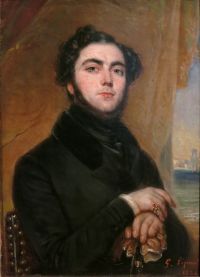
Portrait of Eugène Sue Eugène Sue The Wandering Jew — Volume 05

Man's death is sweet to Bowanee."
"But sir," cried Rodin, "M. Van Dael speaks of the soul, of the will, of the mind, which are to be brought down by discipline."
"It is true—you kill the soul, and we the body. Give me your hand, brother, for you also are hunters of men."
"But once more, sir,—understand, that we only meddle with the will, the mind," said Rodin.
"And what are bodies deprived of soul, will, thought, but mere corpses?
Come—come, brother; the dead we make by the cord are not more icy and
inanimate than those you make by your discipline.
Source: Gutenberg

Portrait of Eugène Sue Eugène Sue The Wandering Jew — Volume 05

Rodin, Father d'Aigrigny, Gabriel, and the notary, were all under the influence of such complete surprise, that not one of them even remarked how strange it was to hear the sound of this clock.
"Noon!" cried Rodin, as, by an involuntary movement, he hastily placed his two hands upon the casket, as if to take possession of it.
"At last!" cried Father d'Aigrigny, with an expression of joy, triumph transport, which it is impossible to describe. Then he added, as he threw himself into Gabriel's arms, whom he embraced warmly: "Oh, my dear son! how the poor will bless you!
Source: Gutenberg

Portrait of Eugène Sue Eugène Sue The Wandering Jew — Volume 05

I may be hated and despised by all—but God will judge me!" The young priest dried a tear, which trickled from his eye.
"Oh! do not be afraid, my dear boy!" cried Dagobert, with reviving hope.
"All honest men will be on your side!"
"Well done, brother!" said Agricola.
"M. Notary," said Rodin, in his little sharp voice, "please to explain to Abbe Gabriel, that he may perjure himself as much as he thinks fit, but that the Civil Code is much less easy to violate than a mere promise, which is only—sacred!"
"Speak, sir," said Gabriel.
Source: Gutenberg

Get perspective with Kwize: daily news enlightened by great literature