Summary

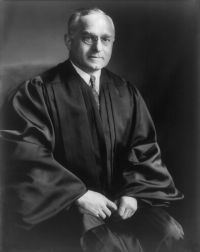
Portrait of Felix Frankfurter Felix Frankfurter A. B. Kirschbaum Company v. Walling…

To search for a dependable touchstone by which to determine whether employees are 'engaged in commerce or in the production of goods for commerce' is as rewarding as an attempt to square the circle. The judicial task in marking out the extent to which Congress has exercised its constitutional power over commerce is not that of devising an abstract formula.
Source: Wikisource

Portrait of Felix Frankfurter Felix Frankfurter A. B. Kirschbaum Company v. Walling…

We cannot, in construing the word 'necessary', escape an inquiry into the relationship of the particular employees to the production of goods for commerce. If the work of the employees has only the most tenuous relation to, and is not in any fitting sense 'necessary' to, the production, it is immaterial that their activities would be substantially the same if the employees worked directly for the producers of goods for commerce.
Source: Wikisource

Portrait of Felix Frankfurter Felix Frankfurter A. B. Kirschbaum Company v. Walling…

The history of Congressional legislation regulating not only interstate commerce as such but also activities intertwined with it, justifies the generalization that, when the federal government takes over such local radiations in the vast network of our national economic enterprise and thereby radically readjusts the balance of state and national authority, those charged with the duty of legislating are reasonably explicit and do not entrust its attainment to that retrospective expansion of meaning which properly deserves the stigma of judicial legislation.
Source: Wikisource

Get perspective with Kwize: daily news enlightened by great literature