Summary

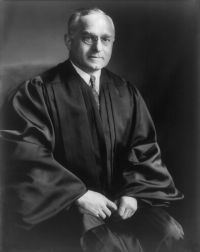
Portrait of Felix Frankfurter Felix Frankfurter Freeman v. Hewit — Opinion of the Court

It is true that the existence of a tax on its local commerce detracts from the deterrent effect of a tax on interstate commerce to the extent that it removes the temptation to sell the goods locally. But the fact of such a tax, in any event, puts impediments upon the currents of commerce across the State line, while the aim of the Commerce Clause was precisely to prevent States from exacting toll from those engaged in national commerce. The Commerce Clause does not involve an exercise in the logic of empty categories.
Source: Wikisource

Portrait of Felix Frankfurter Felix Frankfurter Freeman v. Hewit — Opinion of the Court

The immunities implicit in the Commerce Clause and the potential taxing power of a State can hardly be made to depend, in the world of practical affairs, on the shifting incidence of the varying tax laws of the various States at a particular moment. Courts are not possessed of instruments of determination so delicate as to enable them to weigh the various factors in a complicated economic setting which, as to an isolated application of a State tax, might mitigate the obvious burden generally created by a direct tax on commerce.
Source: Wikisource

Portrait of Felix Frankfurter Felix Frankfurter Freeman v. Hewit — Opinion of the Court

But revenue serves as well no matter what its source. To deny to a State a particular source of income because it taxes the very process of interstate commerce does not impose a crippling limitation on a State's ability to carry on its local function. Moreover, the burden on interstate commerce involved in a direct tax upon it is inherently greater, certainly less uncertain in its consequences, than results from the usual police regulations.
Source: Wikisource

Get perspective with Kwize: daily news enlightened by great literature