Summary

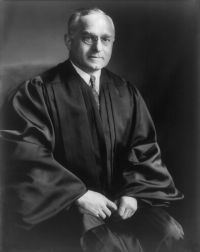
Portrait of Felix Frankfurter Felix Frankfurter O'Malley v. Woodrough/Opinion of the Court…

Is it not therefore morally certain that the discerning statesmen who framed the Constitution and were so sedulously bent on securing the independence of the judiciary intended to protect the compensation of the judges from assault and diminution in the name or form of a tax? Could not the purpose of the prohibition be wholly thwarted if this avenue of attack were left open? Certainly there is nothing in the words of the prohibition indicating that it is directed against one legislative power and not another
Source: Wikisource

Portrait of Felix Frankfurter Felix Frankfurter O'Malley v. Woodrough/Opinion of the Court…

Is it primarily to benefit the judges, or rather to promote the public weal by giving them that independence which makes for an impartial and courageous discharge of the judicial function? Does the provision merely forbid direct diminution, such as expressly reducing the compensation from a greater to a less sum per year, and thereby leave the way open for indirect, yet effective, diminution, such as withholding or calling back a part as a tax on the whole?
Source: Wikisource

Portrait of Felix Frankfurter Felix Frankfurter O'Malley v. Woodrough/Opinion of the Court…

The suggestion that, as citizens, judges are not immune from taxation begs the question here presented. The Constitution itself puts judges in a separate class, declaring that at stated times they shall receive for their services compensation which 'shall not be diminished.' And so their salaries are distinguished from income of others. The immunity extends only to compensation for their services.
Source: Wikisource

Get perspective with Kwize: daily news enlightened by great literature