Summary

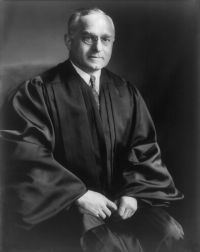
Portrait of Felix Frankfurter Felix Frankfurter United States v. Rumely — Opinion of the Court

If 'lobbying' was to cover all activities of anyone intending to influence, encourage, promote or retard legislation, why did Congress differentiate between 'lobbying activities' and other 'activities * * * intended to influence'? Had Congress wished to authorize so extensive an investigation of the influences that form public opinion, would it not have used language at least as explicit as it employed in the very resolution in question in authorizing investigation of government agencies? Certainly it does not violence to the phrase 'lobbying activities' to give it a more restricted scope.
Source: Wikisource

Portrait of Felix Frankfurter Felix Frankfurter United States v. Rumely — Opinion of the Court

If the present inquiry were sanctioned the press would be subjected to harassment that in practical effect might be as serious as censorship. A publisher, compelled to register with the federal government, would be subjected to vexatious inquiries. A requirement that a publisher disclose the identity of those who buy his books, pamphlets, or papers is indeed the beginning of surveillance of the press. True, no legal sanction is involved here. Congress has imposed no tax, established no board of censors, instituted no licensing system.
Source: Wikisource

Portrait of Felix Frankfurter Felix Frankfurter United States v. Rumely — Opinion of the Court

Surely it cannot be denied that giving the scope to the resolution for which the Government contends, that is, deriving from it the power to inquire into all efforts of private individuals to influence public opinion through books and periodicals, however remote the radiations of influence which they may exert upon the ultimate legislative process, raises doubts of constitutionality in view of the prohibition of the First Amendment.
Source: Wikisource

Get perspective with Kwize: daily news enlightened by great literature