Summary

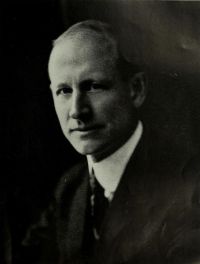
Portrait of Frank Pierrepont Graves Frank Pierrepont Graves The Burial Customs of the Ancient Greeks

Every nook and corner of Greek literature must be explored, every exhumed inscription, monument, statue and vase must be carefully scanned, to find a hint here and there to illustrate and illuminate the subject. Using the word monument in a broad sense, it is from monuments, rather than literature, that we get the most trustworthy information on Greek burial customs. Ancient literature reveals the thought of the superior minds.
Source: Gutenberg

Portrait of Frank Pierrepont Graves Frank Pierrepont Graves The Burial Customs of the Ancient Greeks

The general opinion of Greece strongly condemned an animosity so lasting as to extend to neglect of the dead. Isocrates made a telling point when, appealing in behalf of the Plataeans to the Athenians against the Thebans, he exclaimed [3] : “It is not an equal misfortune, [11] for the dead to be denied burial and for the living to be deprived of their country, since the former is yet more disgraceful to those that forbid the funeral rites than to those who suffer the inhumanity.”
Source: Gutenberg

Portrait of Frank Pierrepont Graves Frank Pierrepont Graves The Burial Customs of the Ancient Greeks

The spirit of Patroclus, weary of the long delay, while the struggle continued over his mortal remains, and angered by the criminal apathy of his friend, beseeches Achilles to bury him as speedily as possible, that he may the sooner pass the gates of Hades [83] .
Most truly it has been said that in the eyes of the Greeks, “a quick burial is a propitiation of the deceased [84] .”
Source: Gutenberg

Get perspective with Kwize: daily news enlightened by great literature