Summary

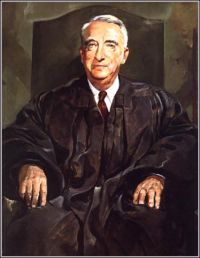
Portrait of Fred M. Vinson Fred M. Vinson Oyama v. California — Opinion of the Court

Whenever a Chinese or English parent, to take an example, pays a third party to deed land to a stranger, a resulting trust is presumed to arise, and the stranger is presumed to hold the land for the benefit of the person paying the consideration; [25] when the Alien Land Law applies a similar presumption to a like transfer by Kajiro Oyama to a stranger, it appears merely to reiterate the generally applicable law of resulting trusts.
Source: Wikisource

Portrait of Fred M. Vinson Fred M. Vinson Oyama v. California — Opinion of the Court

The California law purports to permit citizen sons to take gifts of agricultural land from their fathers, regardless of the fathers' nationality. Yet, as indicated by this case, if the father is ineligible for citizenship, facts which would usually be considered indicia of the son's ownership are used to make that ownership suspect; if the father is not an ineligible alien, however, the same facts would be evidence that a completed gift was intended.
Furthermore, Fred Oyama had to counter evidence that his father was remiss in his duties as guardian.
Source: Wikisource

Portrait of Fred M. Vinson Fred M. Vinson Oyama v. California — Opinion of the Court

More important to the issue of equal protection, however, our attention has been called to no other case in which the penalty for a guardian's derelictions has fallen on any one but the guardian. At any time the court supervising the guardianship could have demanded the annual accounts and, if appropriate, could have removed Kajiro Oyama as guardian; severe punishment could also have been meted out. [24] The whole theory of guardianships is to protect the ward during his period of incapacity to protect himself. In Fred Oyama's case, however, the father's deeds were visited on the son
Source: Wikisource

Get perspective with Kwize: daily news enlightened by great literature