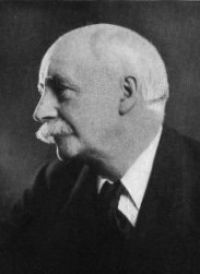
Frederick James Gould

Frederick James Gould

Summary

Portrait of Frederick James Gould Frederick James Gould The Children's Plutarch: Tales of the Romans (1910)

Many women went to the roofs of the houses and waved lights. Thus Rome was grandly illumined by the lamps of the people, instead of by the fires of Catiline.
The feelings of the citizens of Rome and the folk of Italy were like the ebb and flow of the sea, first rolling this way and then that—first for Cicero, then against him; then for Pompey, then for Cæsar. It was a time of change—a time of war and rumors of war. Cicero was banished from Rome for more than a year, and his houses were burned to the ground. He dwelt in Greece, but kept looking back to Italy with sadness and love.
Source: Wikisource

Portrait of Frederick James Gould Frederick James Gould The Children's Plutarch: Tales of the Romans (1910)

The enemy quickly gathered their forces. First marched thirty thousand men, all belonging to one tribe, clashing their spears one against the other, and keeping up a roar of voices. Through the river splashed the blue-eyed Teutons. The Romans charged them. The struggle went on till the sun set, and the stars gleamed out over the hills and plains and the two camps.
By night Marius sent a band of three thousand men to steal behind the position of the Teutons, ready to fall upon them by surprise.
At dawn the Roman army began to descend the hill on which they had been encamped.
Source: Wikisource

Portrait of Frederick James Gould Frederick James Gould The Children's Plutarch: Tales of the Romans (1910)

For the sake of Rome we are ready to sacrifice our hands, our hearts, our lives. I am not the only one who is willing to suffer. There are in the city three hundred young men who have sworn to slay you if I did not succeed. At any moment any of them may fall upon you and rob the Etruscans of their king.”
The king admired the valor of Mutius and the spirit of the Roman people. He let him go free, and made peace with the city of Rome, and retired to his own country.
Brutus, for the sake of justice and of the city of Rome, bore pain in his heart and soul.
Source: Wikisource

Get perspective with Kwize: daily news enlightened by great literature