Summary

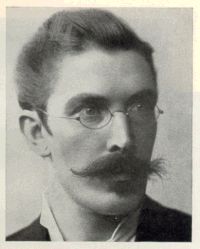
Portrait of Friedrich Loofs Friedrich Loofs Nestorius and His Place in the History of Christian Doctrine (1914)

On ne conçoit pas deux prosôpons des fils, ni encore deux prosôpons des hommes, mais d'un seul homme, qui est mu de la même manière par l'autre. L'union des prosôpons a eu lieu en prosôpon et non en essence ni en nature. On ne doit pas concevoir une essence sans hypostase, comme si l'union avait eu lieu en une essence et qu'il y eut un prosôpon d'une seule essence. Mais les natures subsistent dans leurs prosôpons et dans leurs natures et dans le prosôpon d'union. Quant au prosôpon naturel de l'une, l'autre se sert du même en vertu de l'union
Source: Wikisource

Portrait of Friedrich Loofs Friedrich Loofs Nestorius and His Place in the History of Christian Doctrine (1914)

But Luther thought that Nestorius as a rough and unlearned man did not comprehend the communicatio idiomatum, which in his opinion justifies the phrase that God was born of Mary, just as a mother (although the soul of her child does not come from her) is nevertheless not only the mother of the body, but the mother of the child [45] .
Luther had but a very limited knowledge about Nestorius. To the increased knowledge of our day even before the discovery of the Treatise of Heraclides the doctrine of Nestorius showed itself in a still more favourable light.
Source: Wikisource

Get perspective with Kwize: daily news enlightened by great literature