Summary

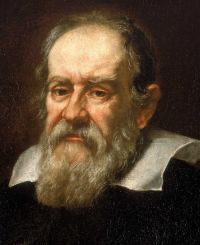
Portrait of Galileo Galilei Galileo Galilei Discourse concerning the Natation of Bodies (1663)

Vacuum, according to the same Aristotle himself, there is none, and were there, nothing would move in it: there remaine the Region of Fire, but being so far distant from us, what Experiment can assure us, or hath assertained Aristotle in such sort, that he should as of a thing most obvious to sence, affirm what he produceth in confutation of Democritus, to wit, that a great Mass of Air, is moved no swifter than a little one of water?
Source: Wikisource

Portrait of Galileo Galilei Galileo Galilei Discourse concerning the Natation of Bodies (1663)

Moreover, what Resistance can we place in the Continuity of the water if we see that it is impossible to find any Body of whatsoever Matter Figure or Magnitude, which being put into the water, shall be obstructed and impeded by the Tenacity of the parts of the water to one another, so, but that it is moved upwards or downwards, according as the Cause of their Motion transports it?
Source: Wikisource

Portrait of Galileo Galilei Galileo Galilei Discourse concerning the Natation of Bodies (1663)

He proposeth likewise another Conclusion, which likewise seems
different from the truth, and it is, That some things, by reason of their littleness fly in the Air, as the small dust of the Earth, and the thin leaves of beaten Gold: but in my Opinion, Experience shews us, that that happens not only in the Air, but also in the water, in which do descend, even those Particles or Atomes of Earth, that distur be it, whose minuity is such, that they are not deservable, save only when they are many hundreds together.
Source: Wikisource

Get perspective with Kwize: daily news enlightened by great literature