Summary

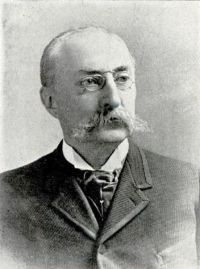
Portrait of Garrick Mallery Garrick Mallery Sign Language Among North American Indians Compared With That Among Other Peoples And Deaf-Mutes

The secretary, not being told what to write about, without surprise, but somewhat amused, raises his left hand with the ends of the thumb and finger joined, the other fingers naturally open, a common sign for inquiry. "What shall the letter be about?" The wife, not being ready of speech, to rid herself of the embarrassment, resorts to the mimic art, and, without opening her mouth, tells with simple gestures all that is in her mind. Bringing her right hand to her heart, with a corresponding glance of the eyes she shows that the theme is to be love.
Source: Gutenberg

Portrait of Garrick Mallery Garrick Mallery Sign Language Among North American Indians Compared With That Among Other Peoples And Deaf-Mutes

Even when he finds that his interlocutor insists upon understanding and presenting a certain sign in a manner and with a significance widely different from those to which he has been accustomed, it is within the very nature, tentative and elastic, of the gesture art—both performers being on an equality—that he should adopt the one that seems to be recognized or that is pressed upon him, as with much greater difficulty he has learned and adopted many foreign terms used with whites before attempting to acquire their language, but never with his own race.
Source: Gutenberg

Portrait of Garrick Mallery Garrick Mallery Sign Language Among North American Indians Compared With That Among Other Peoples And Deaf-Mutes

It is an old adage about oral speech that a man who understands but one language understands none. The science of a sign talker possessed by a restrictive theory is like that of Mirabeau, who was greater as an orator than as a philologist, and who on a visit to England gravely argued that there was something seriously wrong in the British mind because the people would persist in saying "give me some bread" instead of "donnez-moi du pain," which was so much easier and more natural.
Source: Gutenberg

Get perspective with Kwize: daily news enlightened by great literature