Summary

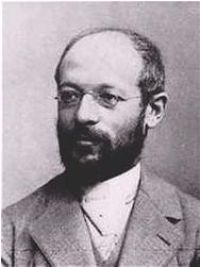
Portrait of Georg Simmel Georg Simmel The Persistence of Social Groups

Honor demands from the individual those kinds of conduct which promote these ends of his society. Since conformity to this demand acquires, on the one hand, an ideal worth, so ideal and so powerful at the same time that honor is preferred to life; since the preservation of honor, on the other hand, has very sensible pleasurable effects upon the individual, and its loss produces equally keen pains, it comes about that honor constitutes an extraordinarily close bond between the whole group and its elements.
Source: Wikisource

Portrait of Georg Simmel Georg Simmel The Persistence of Social Groups

It is the essence of the human that the condition of the existence of its separate factors is the existence of their opposites. The manifoldness of formations, of changes, of contents, is so essential for the self-preservation of the group, not only because in each limited period the unity of the group stands out in contrast with the passing variations, but especially because the unity always recurs as the same, while the formations, the changes, the contents, from which it is distinguished are each time different.
Source: Wikisource

Portrait of Georg Simmel Georg Simmel The Persistence of Social Groups

Complete morality contains what honor and law can only command and forbid. Fulfilled honor prohibits of itself what the law lays under penalty, but honor does not assure everything which morality demands, nor does the criminal law secure everything that morality and honor decree. From this series we may immediately conclude that honor corresponds, as a social requisite, to the needs of a somewhat contracted circle, between those of the largest civic group, which coerces its members by penal law, and those of purely personal life, which finds its norms only in the autonomy of the individual.
Source: Wikisource

Get perspective with Kwize: daily news enlightened by great literature