Summary

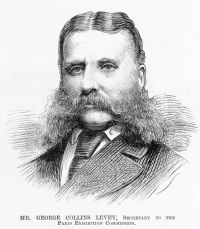
Portrait of George Collins Levey George Collins Levey 1911 Encyclopædia Britannica, Volume 10… (1911)

The expenditure by the United Kingdom was defrayed out of the consolidated revenue, each British colony defraying its own expenses. The display of the United Kingdom was under the control of a royal commission, of which the prince of Wales was president. The number of paying visitors to the exhibition was 13,000,000, and the cost of the enterprise to the French government, which supplied all the funds, was a little less than a million sterling, after allowing for the value of the permanent buildings and the Trocadero Palace, which were sold to the city of Paris.
Source: Wikisource

Portrait of George Collins Levey George Collins Levey 1911 Encyclopædia Britannica, Volume 10… (1911)

None of the International Exhibitions held between 1857 and 1873 had attracted as many as 7,000,000 visitors, but the gradual extension of education amongst the masses, and the greater facilities for locomotion, brought about by the growth of the railway system in all portions of the civilized world, largely increased the attendances at subsequent World’s Fairs. The Centennial Exhibition of 1876, to celebrate the one-hundredth anniversary of American Independence, was held at Fairmount Park, Philadelphia.
Source: Wikisource

Portrait of George Collins Levey George Collins Levey 1911 Encyclopædia Britannica, Volume 10… (1911)

The United Kingdom, British India, Canada, Victoria, New South Wales, Queensland, South Australia, Cape Colony and some of the British crown colonies occupied nearly one-third of the space set aside for nations outside France. Germany was the only great country which was not represented, but there were a few German paintings. The display of fine arts and machinery was upon a very large and comprehensive scale, and the Avenue des Nations, a street 2400 ft.
Source: Wikisource

Get perspective with Kwize: daily news enlightened by great literature