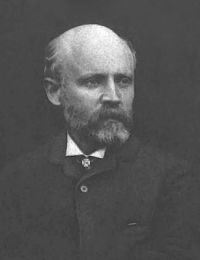
George Croom Robertson

George Croom Robertson

Summary

Portrait of George Croom Robertson George Croom Robertson 1911 Encyclopædia Britannica, Volume 13… (1911)

No year had passed since the appearance of Leviathan without some indignant protest against the influence which its trenchant doctrine was calculated to produce upon minds longing above everything for civil repose; but after the Restoration “Hobbism” became a fashionable creed, which it was the duty of every lover of true morality and religion to denounce. Two or three days after Charles’s arrival in London, Hobbes drew in the street the notice of his former pupil, and was at once received into favour.
Source: Wikisource

Portrait of George Croom Robertson George Croom Robertson 1911 Encyclopædia Britannica, Volume 13… (1911)

Taking up mathematics when not only his mind was already formed but his thoughts were crystallizing into a philosophical system, Hobbes had, in fact, never put himself to school and sought to work up gradually to the best knowledge of the time, but had been more anxious from the first to become himself an innovator with whatever insufficient means.
Source: Wikisource

Portrait of George Croom Robertson George Croom Robertson 1911 Encyclopædia Britannica, Volume 13… (1911)

The State, it now seemed to Hobbes, might be regarded as a great artificial man or monster (Leviathan) , composed of men, with a life that might be traced from its generation through human reason under pressure of human needs to its dissolution through civil strife proceeding from human passions. This, we may suppose, was the presiding conception from the first, but the design may have been variously modified in the three or four years of its execution.
Source: Wikisource

Get perspective with Kwize: daily news enlightened by great literature