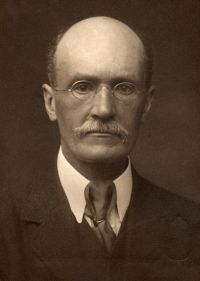
George Gilbert Aimé Murray

George Gilbert Aimé Murray

Summary

Portrait of George Gilbert Aimé Murray George Gilbert Aimé Murray The Stoic Philosophy (1915)

One doubts whether, when the critical moment came, her relationships would really prove as important as her executors hoped; and it is the same with all the conventional goods of the world when brought before the bar of Zeno. Rank, riches, social distinction, health, pleasure, barriers of race or nation—what will those things matter before the tribunal of ultimate truth? Not a jot. Nothing but goodness is good. It is what you are that matters what you yourself are; and all these things are not you. They are external; they depend not on you alone, but on other people.
Source: Wikisource

Portrait of George Gilbert Aimé Murray George Gilbert Aimé Murray The Stoic Philosophy (1915)

Let us in the meantime accept this conception of a force very like that which most of us assume when we speak of evolution; especially, perhaps, it is like what Bergson calls La Vie or L'Élan Vital at the back of L'Évolution Créatrice, though to the Greeks it seemed still more personal and vivid; a force which is present in all the live world, and is always making things grow towards the fulfilment of their utmost capacity. We see now what goodness is; it is living or acting according to Phusis, working with Phusis in her eternal effort towards perfection.
Source: Wikisource

Portrait of George Gilbert Aimé Murray George Gilbert Aimé Murray The Stoic Philosophy (1915)

There were certain old Greek myths which told how Heracles and other heroes had passed laborious lives serving and helping humanity, and in the end became gods. The Stoics used such myths as allegories. That was the way to heaven; that was how a man may at the end of his life become not a dead body, but a star. In the magnificent phrase which Pliny translates from a Greek Stoic, God is that, and nothing but that; man's true God is the helping of man; Deus est mortali iuvare mortalem.
No wonder such a religion appealed to kings and statesmen and Roman governors.
Source: Wikisource

Get perspective with Kwize: daily news enlightened by great literature