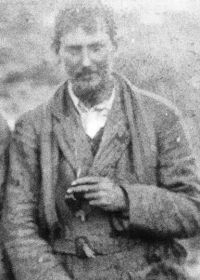
George Herbert Leigh Mallory

George Herbert Leigh Mallory

Summary

Portrait of George Herbert Leigh Mallory George Herbert Leigh Mallory The First High Climb (1922)

I was told at Oxford last year, by Sir Walter Raleigh, that the physiologists said it was physiologically impossible to climb to the top of Mount Everest without oxygen — the matter had been proved by experiments in a pressure-reducing chamber. I told Sir Walter that the physiologists might explode themselves in their diabolical chamber, but we would do what we could to explode their damnable heresy — or words to that effect. I always, as a matter of course, take off my hat to scientists, as latter-day Olympians breathing a different if not purer air than common mortals.
Source: Wikisource

Portrait of George Herbert Leigh Mallory George Herbert Leigh Mallory The First High Climb (1922)

The best experiment in this respect is to go to Mount Everest, or some other high mountain, and see how you feel; the scientists may explain your feelings, but when it comes to prophecy they have less right to be heard than a high-climbing mountaineer; the idea of the man who has tried as to how much higher he might go should be of incomparably more value than any conclusion proceeding merely from a laboratory.
Source: Wikisource

Portrait of George Herbert Leigh Mallory George Herbert Leigh Mallory The First High Climb (1922)

An impartial judge may say that in the last analysis the accident was due to imperfect knowledge of snow in this part of the Himalayas; and with the comment that one never can know enough about snow, I should bow to that judgment. The lesson at all events will not be forgotten, and one may suppose that another party will not be caught in the same way.
About the other dangers it is necessary to say more, because they must vitally affect the organization of any attempt to climb the mountain. Every one will remember how Morshead’s collapse compromised our plan of descent.
Source: Wikisource

Get perspective with Kwize: daily news enlightened by great literature