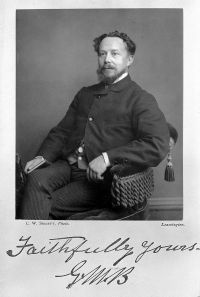
George Matthews Bennett

George Matthews Bennett

Summary

Portrait of George Matthews Bennett George Matthews Bennett Wanderings in New South Wales, Batavia… (1834)

There is nothing abrupt or gaudy in the plumage of this bird; the colours harmonize in the most elegant manner, and the chasteness does not fail of exciting our admiration. The mandibles are of a light blue; irides bright yellow; and the feet of a lilac tint.
This elegant creature has a light, playful, and graceful manner, with an arch and impudent look; dances about when a visitor approaches the cage, and seems delighted at being made an object of admiration: its notes are very peculiar, resembling the cawing of the raven, but its tones [42] are by far more varied.
Source: Gutenberg

Portrait of George Matthews Bennett George Matthews Bennett Wanderings in New South Wales, Batavia… (1834)

Many of the hedges on this road are formed by an elegant small leaved bamboo, with its pendent branches drooping in graceful tufts, the tree itself not attaining the elevation usual with other more useful but less ornamental species: this bamboo forms a very beautiful, as well as compact fence. On attaining the gentle and gradual rise of the hill, the view that expands itself is both extensive and grand; embracing a wide portion of this splendid island, and causing feelings of regret in the mind of the spectator, that so much fertile land should be permitted to lie waste.
Source: Gutenberg

Portrait of George Matthews Bennett George Matthews Bennett Wanderings in New South Wales, Batavia… (1834)

Neat white houses and elegant mansions are seen on the open plain, or peeping above the dense vegetation when constructed upon a gentle rising hill. As far as the eye can reach over the tranquil [140] waters, small wooded islands stud the ocean, and more distant, land indistinctly appears. The river, or creek, is animated by numerous native boats of all classes, passing and repassing, engaged in various occupations, or lying tranquilly at rest, like the sea-bird upon the waters, after its toil is over.
Source: Gutenberg

Get perspective with Kwize: daily news enlightened by great literature