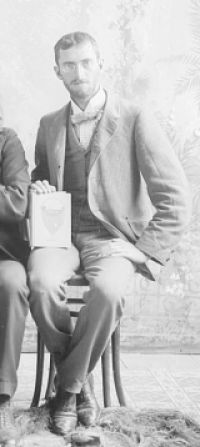
George Parker Winship

George Parker Winship

Summary

Portrait of George Parker Winship George Parker Winship The Coronado expedition, 1540-1542 (1896)

While they were making these discoveries, some Indians came to Cibola from a village which was 70 leagues east of this province, called Cicuye. Among them was a captain who was called Bigotes (Whiskers) by our men, because he wore a long mustache. He was a tall, well-built young fellow, with a line figure. He told the general that they had come in response to the notice which had been given, to offer themselves as friends, and that if we wanted to go through their country they would consider us as their friends.
Source: Wikisource

Portrait of George Parker Winship George Parker Winship The Coronado expedition, 1540-1542 (1896)

The brief and gloomy record of the voyage of Villalobos is a fit ending for this story of the Coronado expedition to Cibola and Quivira, of how it came about, of what it accomplished, and of what resulted from it. Nothing is the epitome of the whole story. The lessons which it teaches are always warnings, but if one will read history rightly, every warning will be found to be an inspiration.
Source: Wikisource

Portrait of George Parker Winship George Parker Winship The Coronado expedition, 1540-1542 (1896)

The priest can hardly be blamed for translating a house entrance into a doorway instead of picturing it as a bulkhead or as the hatchway of a ship. The Spaniards—those who had seen service in the Indies—had outgrown their earlier custom of reading into the Indian stories the ideas of government and of civilization to which they were accustomed in Europe. But Friar Marcos was at a disadvantage hardly less than that of the companions of Cortes, when they first heard of Moctecuhzoma, because his experience with the wealth of the New World had been in the realm of the Incas.
Source: Wikisource

Get perspective with Kwize: daily news enlightened by great literature