Summary

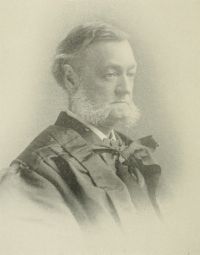
Portrait of George Shiras, Jr. George Shiras, Jr. Green v. Bogue — Opinion of the Court

We do not feel called upon to define the nature of Mrs. Green's estate under her father's will, but we are satisfied that she was adequately represented by the trustees, and that the withdrawal of his exceptions by Edward Green, after issue formed and evidence, must be deemed to have been a final abandonment of such exceptions, and an acquiescence in the decree.
Source: Wikisource

Portrait of George Shiras, Jr. George Shiras, Jr. Green v. Bogue — Opinion of the Court

A comparison of the facts alleged and the charges made in the petition in the Cook county court and in the bill in the present case has satisfied us that substantially they were the same. It is now contended on the part of the plaintiffs in error that the cases cannot be deemed legally the same, so as to permit a plea of the first proceedings and decree as a bar to the present bill, because the relief asked for in the state court was the setting aside the sale, whereas the relief now sought is to enforce a trust as to a portion of the purchase money, leaving the sale to stand.
Source: Wikisource

Portrait of George Shiras, Jr. George Shiras, Jr. Green v. Bogue — Opinion of the Court

On the 10th day of January, 1890, George Bass, one of the masters in chancery of the circuit court, in pursuance to the decree entered in the case of Peters, Receiver, v. Hyman, Jr., et al., on the 9th day of April, 1888, filed his report in the circuit court of Cook county, in which he set out that he had advertised the premises known as section 21, aforesaid, as described in the former decree of sale, to be sold on the 21st day of December, 1889, at the east main entrance of the courthouse in the city of Chicago, county of Cook, and state of Illinois, to the highest and best bidder for cash
Source: Wikisource

Get perspective with Kwize: daily news enlightened by great literature