Summary

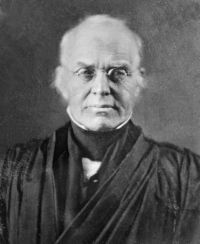
Portrait of Joseph Story Joseph Story Hugh Wallace v. Mary Wormley — Opinion of the Court

When the party puts his right to sell, not upon an honest exercise of opinion at the time of sale, but upon a distinct anterior transaction, invalid and incomplete, by which he became clothed with the beneficial interest of the estate? When he claims to be, not the disinterested trustee, selling the estate, but the trustee purchasing by exchange the trust fund, and thus entitled to deal with it according to his own discretion, and for his own private accommodation, as absolute owner?
Source: Wikisource

Portrait of Joseph Story Joseph Story Hugh Wallace v. Mary Wormley — Opinion of the Court

But, independent of these considerations, there is a stubborn rule of equity, founded upon the most solid reasoning, and supported by public policy, which forbade any such exchange. No rule is better settled than that a trustee cannot become a purchaser of the trust estate. He cannot be at once vendor and vendee. He cannot represent in himself two opposite and conflicting interests. As vendor he must always desire to sell as high, and as purchaser to buy as low, as possible
Source: Wikisource

Portrait of Joseph Story Joseph Story Hugh Wallace v. Mary Wormley — Opinion of the Court

The sale is not to be made, unless a reinvestment can, in the opinion of the trustee, be advantageously made. He is not to sell upon mere general speculation, but for the purpose of direct reinvestment. And it is very difficult to perceive how the trustee could arrive at the conclusion, that it was proper to sell, unless he had, at the same time, fixed on some definite reinvestment, which, compared with the former estate, would be advantageous to the parties. Although, therefore, the acts of sale, and purchase, are to be distinct, they are connected with each other
Source: Wikisource

Get perspective with Kwize: daily news enlightened by great literature