Summary

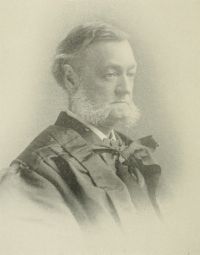
Portrait of George Shiras, Jr. George Shiras, Jr. The Britannia — Opinion of the Court

Rule 21 provides that 'every steam vessel when approaching another vessel so as to involve risk of collision shall slacken her speed, or, if necessary, stop and reverse.' This rule was likewise obeyed by both ships, in that, so long as they were advancing, after having seen and signaled each other, they went at a slow rate of speed. Later in the history of the incident, they both stopped and reversed. In so doing the Britannia was clearly obeying the letter and spirit of the rule. Whether the Beaconsfield was justified in stopping and reversing we shall presently consider.
Source: Wikisource

Portrait of George Shiras, Jr. George Shiras, Jr. The Britannia — Opinion of the Court

But the duty of the steamer to port her helm and go to the starboard implies a correlative obligation of the ship to keep her course.' See, also, the Scotia, 14 Wall. 181.
'It is the duty of a steamer to keep out of the way of a sailing vessel when they are approaching in such directions as to involve a risk of collision. The correlative obligation rests upon the sailing vessel to keep her course, and the steamer may be mannaged upon the assumption that she will do so.' The Free State, 91 U.S. 200.
Source: Wikisource

Portrait of George Shiras, Jr. George Shiras, Jr. The Britannia — Opinion of the Court

But, as already stated, the pilot of the Beaconsfield was well aware of the existence of the counter current against which the Britannia had to contend in changing her course to the starboard, and if we are obliged to impute fault to the Britannia, in not having foreseen and provided against that current, so we must likewise blame the Beaconsfield for overlooking the effect of such current in delaying the movement of the Britannia to the starboard.
Source: Wikisource

Get perspective with Kwize: daily news enlightened by great literature