Summary

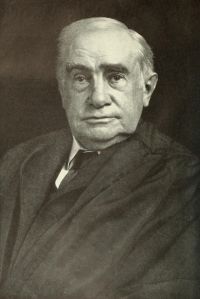
Portrait of Henry Billings Brown Henry Billings Brown The Umbria — Opinion of the Court

The general consensus of opinion in this country is to the effect that a steamer is bound to use only such precautions as will enable her to stop in time to avoid a collision, after the approaching vessel comes in sight, provided such approaching vessel is herself going at the moderate speed required by law. In a dense fog this might require both vessels to come to a standstill, until the course of each was definitely ascertained. In a lighter fog it might authorize them to keep their engines in sufficient motion to preserve their steerageway.
Source: Wikisource

Portrait of Henry Billings Brown Henry Billings Brown The Umbria — Opinion of the Court

As the general speed of the Iberia did not exceed four knots an hour,-the lowest speed necessary to the maintenance of steerageway,-it is clear that she was guilty of no violation of the thirteenth article.
Her conduct, after the whistles of the Umbria began to be heard by the Iberia's officers, is deserving of more serious consideration. We certainly do not wish to be understood as holding that it is necessary for a steamer to stop the moment she hears a whistle ahead of her in a fog, though it be directly ahead. Under such circumstances she may proceed at a reduced rate of speed.
Source: Wikisource

Portrait of Henry Billings Brown Henry Billings Brown The Umbria — Opinion of the Court

That the Umbria was gravely in fault in the matter of speed is too clear for serious argument. She was within 12 miles of one of the most frequented harbors in the world, in the track of vessels bound into and out of this harbor, and was running at a speed of from 16 to 19 knots an hour, through an intermittent or variable fog, which was sometimes so dense that vessels could not see each other more than one or two lengths off.
Source: Wikisource

Get perspective with Kwize: daily news enlightened by great literature