“ Sometimes the long motor roar of a ship coming out of a dive attracts his half-hearted attention. Occasionally an intricate formation maneuver over his head warrants his momentary gaze. Often he stares, half abstractedly, skyward while he works. ”
Maneuver
Definition and stakes
The theme of “maneuver” has been addressed by authors such as baron de Antoine Henri Jomini, Charles Jean Jacques Joseph Ardant du Picq, James Collins, James A. Moss and Various. It is often associated with terms like engine, wheel, ship, flight and aircraft.
Quotes about “maneuver”
Charles Jean Jacques Joseph Ardant du Picq, Battle Studies; Ancient and Modern Battle
“ With the power of modern weapons, which forces you to slow down if it does not stop you, the advance under fire becomes almost impossible. The advantage is with the defensive. This is so evident that only a madman could dispute it. What then is to be done? Halt, to shoot at random and cannonade at long range until ammunition is exhausted? Perhaps. But what is sure, is that such a state of affairs makes maneuver necessary. There is more need than ever for maneuver at a long distance in an attempt to force the enemy to shift, to quit his position. What maneuver is swifter than that of cavalry? ”
baron de Antoine Henri Jomini, The Art of War
“ It may be laid down as a general principle, that, if the enemy divide his forces on an extended front, the best direction of the maneuver-line will be upon his center, but in every other case, when it is possible, the best direction will be upon one of the flanks, and then upon the rear of his line of defense or front of operations. ”
James A. Moss, Manual of Military Training
“ Such a maneuver would probably be disconcerting to anyone who might be lying in wait for you, and would be quite likely to cause them to show themselves sooner than they intended, and thus give you a chance to turn around and get away. If they fired on you while you were approaching at a run, they would not be very likely to hit you. ”
Various, Astounding Stories of Super-Science July 1930
“ This move is necessary because no single dwelling place is large enough to be used as a place of maneuver—and from now on until the command is given, maneuvers must not be held Outside! For hark ye, O Spokesmen, O Gens of Earth, we are about to start upon our voyage into outer space! Spokesmen, call in your maneuvering myriads! You have five minutes!"In five minutes not a flying man could be seen in all the cold, stormy outside. Dalis spoke again. ”
baron de Antoine Henri Jomini, The Art of War
“ A maneuver to outflank and turn a wing should be connected with other attacks, and opportunely supported by an attempt of the remainder of the army on the enemy's front, either against the wing turned or against the center. Finally, strategic operations to cut an enemy's line of communications before giving battle, and attack him in rear, the assailing army preserving its own line of retreat, are much more likely to be successful and effectual, and, moreover, they require no disconnected maneuver during the battle. ”
United States. War Department, Infantry Drill Regulations, United States Army…
“ After the mechanism of extended order drill has been learned with precision in the company, every exercise should be, as far as practicable, in the nature of a maneuver (combat exercise) against an imaginary, outlined, or represented enemy. ”
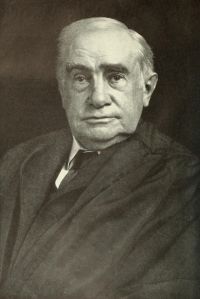 Henry Billings Brown,
The Umbria — Opinion of the Court
Henry Billings Brown,
The Umbria — Opinion of the Court
“ If two steamers are approaching each other in a fog, manifestly their maneuvers must be determined, not by the chance of their meeting at a point where their courses intersect, but upon the theory that their courses shall not actually intersect; in other words, that both shall stop before the point of intersection is reached. And if one of them is running at such a speed that no maneuver on the part of the other can prevent that one from passing the point of intersection, the latter only is responsible. ”
Naval War College, Sound Military Decision
“ Flanking maneuvers and retrograde movements, both sometimes profitably employed to decoy the enemy, may frequently be utilized to gain advantageous relative position. The proper objective of each is the maintenance of a favorable situation, or the alteration of an unfavorable one, either locally or with reference to the larger phases of operations, through measures involving [61] apportionment of fighting strength, or obtaining advantages of position, or retaining or gaining freedom of action. ”
baron de Antoine Henri Jomini, The Art of War
“ An offensive order of battle should have for its object to force the enemy from his position by all reasonable means. 2. The maneuvers indicated by art are those intended to overwhelm one wing only, or the center and one wing at the same time. An enemy may also be dislodged by maneuvers for outflanking and turning his position. ”
Sun Tzu, The Art of War (2000)
“ In battle, there are not more than two methods of attack—the direct and the indirect; yet these two in combination give rise to an endless series of maneuvers. ”
baron de Antoine Henri Jomini, The Art of War
“ As to maneuvers for breaking through a line and calculations upon the co-operation of columns proceeding from the general front of the army, with the intention of effecting large detours around an enemy's flank, it may be stated that their result is always doubtful, since it depends upon such an accurate execution of carefully-arranged plans as is rarely seen. ”
Charles Jean Jacques Joseph Ardant du Picq, Battle Studies; Ancient and Modern Battle
“ Confusion in many minds between maneuvers and action brings about doubt and mistrust of our regulation drills. These are good, very good as far as they go, inasmuch as they give methods of executing all movements, of taking all possible formations with rapidity and good order. ”
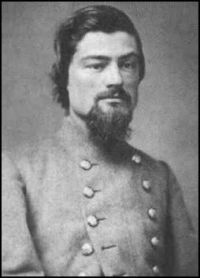 Basil Wilson Duke,
History of Morgan's Cavalry
Basil Wilson Duke,
History of Morgan's Cavalry
“ It admitted, too, of such facility of maneuvering, it could be thrown about like a rope, and by simply facing to the right or left, and double-quicking in the same direction, every man could be quickly concentrated at any point where it was desirable to mass them. ”
Anna B. Badlam, The World and Its People, Book VII: Views in Africa
“ It is interesting to watch their flight; for it seems to consist of a series of maneuvers, as they fly, now against the wind, when they always ascend, thus taking advantage of its force; now before the wind, when they descend, that little exertion may be needed to keep them above water; then, whirling rapidly, like a hawk, to exhaust their speed when wishing to check their rapid flight. ”
James Norman Hall, High Adventure: A Narrative of Air Fighting in France
“ If their first estimate of our range has been an accurate one, if they place them uncomfortably close, so that we can hear, all too well, above the roar of our motors, the rending Gr-r-rOW, Gr-r-rOW, of the shells as they explode, we sail calmly—to all outward appearances—on, maneuvering very little. ”
Sun Tzu, The Art of War (2000)
“ The difficulty of tactical maneuvering consists in turning the devious into the direct, and misfortune into gain. ”
baron de Antoine Henri Jomini, The Art of War
“ If every army were a solid mass, capable of motion as a unit under the influence of one man's will and as rapidly as thought, the art of winning battles would be reduced to choosing the most favorable order of battle, and a general could reckon with certainty upon the success of maneuvers arranged beforehand. ”
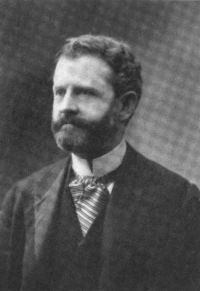 Francis Whiting Halsey,
The Literary Digest History of the World War…
(1920)
Francis Whiting Halsey,
The Literary Digest History of the World War…
(1920)
“ Loop-the-loop, caper-cutting, all the acrobatic performances that at first attended exhibition flying, became in the war normal evolutions. Only excess power for sudden bursts of speed and climbing could now save one in a perilous moment. Daily encounters in the sky proved conclusively that flying had been as thoroughly mastered as horseback riding. Machines were made to respond to the subconscious action of the rider as obediently as a cavalry horse responds. ”
 Allen Upward,
The International Spy
Allen Upward,
The International Spy
“ Unlike a motor car, in which the hand of the driver has to be perpetually on the steering-gear, and his eye perpetually on the alert, the pilot engine seemed to be flung forward like a missile, guided by its own velocity, and clinging to the endless rails with its wheels as with iron claws. ”
 Claude Grahame-White,
The Aeroplane
Claude Grahame-White,
The Aeroplane
“ He will wheel, dodge, and eventually turn tail. All the time his aim will be to see what lies below him, to watch the marchings of the troops which will look so tiny and remote, and form an opinion in his mind as to what the battle line will be. ”
Rowland Walker, Dastral of the Flying Corps
“ The daring aviator, who was flying a new two-seater fighting machine with a twelve-cylindered engine, capable of giving over fourteen hundred revolutions a minute, seemed perfectly oblivious of the danger he was in, as seen by those below, for he careered through space at a speed varying from eighty to nearly one hundred and twenty miles an hour, and performed the most amazing spirals, twists, and gymnastic gyrations imaginable. ”
Mark Herbert Joseph Bennett, Under the periscope (1919)
“ A whirr and a rush of motors and a seaplane whizzed past, soaring up and over on the look-out for the enemy. Away to the south’ard others could be seen wheeling and crossing high up in the glare of the searchlights. ”
Frederic Natusch Maude, 1911 Encyclopædia Britannica (1911)
“ Horses and men have therefore been sorted out everywhere into three categories, light, medium and heavy, and in periods when war was practically chronic, suitable duties have been allotted to each. It is clear, on purely mechanical grounds, that the greater the velocity of motion at the moment of collision the greater will be the chances of success, and this greater speed will be on the side of the bigger horses as a consequence of their longer stride. ”
Gordon Lamont, Opportunities in Aviation
“ There are four forces acting on an airplane in flight, and they must be properly overcome and balanced. There is lift, the upward force exerted on the planes by the passage of air over their surfaces; and drift, the resistance to the passing of an airplane, the retarding force acting opposite to the direction of motion. Then thrust, the forward effort of a machine exerted by a propeller pushing or pulling. ”
Claude Grahame-White,
Learning to Fly: A Practical Manual for Beginners
“ Placing himself in the driving-seat of the machine, while it is at rest on the ground, the pupil takes the upright lever in his right hand, and rests his feet on the rudder-bar, making the various movements of control, again and again, until he finds he is growing accustomed to them, and can place his levers in a position for an ascent or descent, or for a turn, without having to wait while he thinks what it is necessary to do. ”
 Henry David Thoreau,
Early Spring in Massachusetts
(1881)
Henry David Thoreau,
Early Spring in Massachusetts
(1881)
“ It lifts each wing so high above its back and flaps so low and withal so rapidly that it presents the appearance of a broad wheel, almost a revolving sphere, as it whirrs off, like a cannon ball shot from a gun. ”
F. A. Griffiths, The artillerist's manual and british soldier's compendium (1856)
“ When the water is deep, and the current strong, great attention must be paid in fording. The person conducting the column over a direct ford, should keep his eye steadily on an object on the opposite bank, which points out where the ford is: he must never look at the stream, which would deceive him, and would appear to carry him down, and he would endeavour to keep too high up the stream, and miss the ford.3. All those in the rear should keep their eyes on those in front; every individual should wade rather against the stream, in order to resist its power. ”
Edward L. Anderson, Riding and Driving
“ The connection between hand and bit should never be cut off while the horse is in motion, any more than you should unship your rudder while sailing a boat. Do not turn corners too fast nor too soon. When the hub of your front wheel is opposite the corner you are to turn, even if you be too close on that side, there is little danger of hitting even with the hind wheel. Above all things, look where you are going and watch your horse! In any sport where the pleasure and safety of others are in your keeping, to show off or to take risks is unpardonable and dangerous folly. ”
Various, Punch, or the London Charivari…
“ You seize the first motor-car at hand, and start off on the grand hunt after Bill. Through the crowded streets, out into the country highway, you fly at a terrific speed. Up the mountain passes you race, down precipitous slopes with every-increasing momentum. Every moment, it seems, will be your last. ”
“ The speed of my glide kept the prop turning over like a windmill. I picked a field in the country and started talking to myself: “Take it easy—Slow her down—Come around—Don’t undershoot whatever you do—Hold it now, you’re overshooting—Slip it—Not too much—You’re undershooting again—Kick those switches on—Gun it—All right, kick him off—Watch those trees—The fence now—You’re slow—Let ’er drop, the field’s small—Wham!—Watch your roll—Ground loop at the end if you have—You don’t—You made it.” I always talk to myself like that in a forced landing. ”
S. J. Wilson, The Seventh Manchesters: July 1916 to March 1919
“ Then the observation balloons appeared, still observing, at a height of about 100 feet, being pulled steadily by motor conveyances. Intermingled amongst these were staff cars, ambulances, [Pg 122] motor lorries for all purposes, infantry transport, D.A.C. waggons and various other impedimenta of a moving army. ”
Alfred Charles William Harmsworth, Motors and Motor-Driving (1902)
“ I feel inclined myself to plead guilty to the limited extent of acknowledging that there is a glorious exhilaration in the mere motion of a motor-car, strong, unwearying, unresting, with no drawback of regret for strain of exertion on man or beast. The mere sense of motion is a delightful thing ”
Dan Morrissey, Hooking a sky ride (1929)
“ Or lying on our backs in the dusty grass, we watched the silvery specks high above us as they dipped and soared and looped, or came fluttering down in long, giddy tailspins. We knew the different makes of planes, their horsepower, their speed, their dependability. We knew the names of the instructors and cadets, and their nicknames. ”
 Jeffery Farnol,
Great Britain at War
Jeffery Farnol,
Great Britain at War
“ Down sank the aeroplane, the roaring engine fell silent, roared again, and she sped towards us, her wheels within a foot or so of earth. Finally they touched, the engine stopped and the witch-lamb pulled up within a few feet of us. Hereupon the Major waved a gauntleted hand to us. ”
House of Commons, Great Britain, Report from the Select Committee on Steam Carriages… (1831)
“ Do you think that the velocity with which a Coach goes, has any thing to do with the wear of the road, or is it not actually less injurious in proportion to its velocity?—In some instances where any blow takes place the speed does more injury to the road by crushing the materials. ”
 Edward Bulwer-Lytton,
The Coming Race — Chapter XIX
(1871)
Edward Bulwer-Lytton,
The Coming Race — Chapter XIX
(1871)
“ The aerial vehicles were of light substances, not the least resembling our balloons, but rather our boats and pleasure- vessels, with helm and rudder, with large wings as paddles, and a central machine worked by vril. All the vehicles both for land or air were indeed worked by that potent and mysterious agency. ”
E. N. Fales, Learning to fly in the U.S. Army (1917)
“ As you start rolling forward [Pg 82] push the control lever forward which will raise the tail off the ground and place the wings edgewise to the wind while they will not offer resistance to the acquiring of good rolling speed. ”
Henry Kater, A Treatise on Mechanics
“ If a carriage, a horse, or a boat, moving with speed, be suddenly retarded or stopped, by any cause which does not at the same time affect passengers, riders, or any loose bodies which are carried, they will be precipitated in the direction of the motion; because by reason of their inertia, they persevere in the motion which they shared in common with that which transported them, and are not deprived of that motion by the same cause. ”
William Duane, A military dictionary
“ In wheeling, the motion of each man is quicker or slower, according to the distance he is from the right or the left: thus, when you wheel to the right, each man moves quicker than his right-hand man; and, wheeling to the left, each man moves quicker than his left-hand man; the circle that every man wheels being larger, according to the distance he is from the hand he wheels to; as may be seen by describing several circles within one another, at two feet distance from each, which is nearly the space every man is supposed to take up.Wheel-carriages. In artillery, &c. ”
“ Handling ground tackle, handling lines, taking soundings, the use of the lead line, care and use of sails, yachting etiquette, are all given careful attention. Some light is thrown upon the operation of the gasoline motor, and suggestions are made for the avoidance of engine troubles. ”
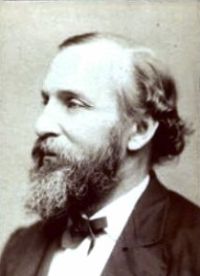 Oliver Optic,
Up the River; or, Yachting on the Mississippi
Oliver Optic,
Up the River; or, Yachting on the Mississippi
“ I shouted at the top of my lungs, as I stood at the wheel, ready to do whatever an emergency might require. The two vessels were grinding their sides together, and nothing but our fenders saved our planks from being torn off. ”
International Short Stories: French
“ That short mass on wheels moves like a billiard-ball, rolls with the rolling of the ship, plunges with the pitching goes, comes, stops, seems to meditate, starts on its course again, shoots like an arrow from one end of the vessel to the other, whirls around, slips away, dodges, rears, bangs, crashes, kills, exterminates. ”
