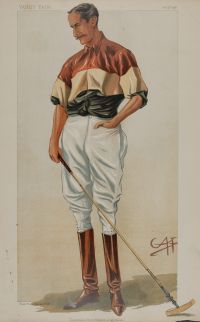
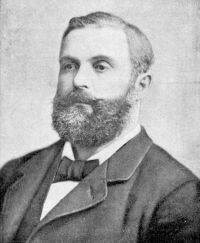
Frederic Natusch Maude

Biographical details

Frederic Natusch Maude 1911 Encyclopædia Britannica (1911)

The essence of the value of the cavalry soldier’s services lies in this, that the demand is never made upon him in its supremest form until the instinct of the real commander realizes that the time has come. Whether it be to cover a retreat, and by the loss of hundreds to save the lives of tens of thousands, or to complete a victory with commensurate results in the opposite direction, the obligation remains the same—to stake the last man and horse in the attainment of the immediate object in view, the defeat of the enemy.
Source: Wikisource

Frederic Natusch Maude 1911 Encyclopædia Britannica, Volume 6… (1911)

Thus in the decade preceding the French Revolution soldiering had reached the very nadir of degradation all over Europe, and, though the Prussians, for instance, still retained a great relative superiority when fighting in closed bodies under the eyes of their leaders, the spirit which had led them to victory when fighting in and for their own country had entirely disappeared from their ranks when they had to face the French in their great struggle for existence.
Source: Wikisource

Frederic Natusch Maude 1911 Encyclopædia Britannica (1911)

Employment of Cavalry.—It is a fundamental axiom of all military action that the officer commanding the cavalry of any force comprising the three arms of the service is in the strictest sense an executive officer under the officer commanding that particular force as a whole. The latter again is himself responsible to the political power he represents. When intricate political problems are at stake, it may be, and generally is, quite impracticable that any subordinate can share the secret knowledge of the power to which he owes his allegiance.
Source: Wikisource

Get perspective with Kwize: daily news enlightened by great literature