Summary

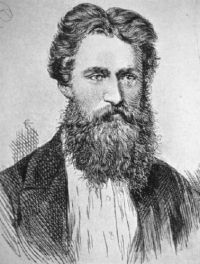
Portrait of George Smith George Smith Encyclopædia Britannica, Ninth Edition (1878)

The impartial study of Lord Ellenborough’s correspondence in the light of the records and criticisms of the times must confirm the contemporary verdict against him on the questions of Afghanistan and Sind, and may lead us to approve of his action in Gwalior. All through his brief Indian career, moreover, his severest critics must admire the splendour of his intellect (which put him in the first rank of orators in the House of Lords down almost to the year of his death) , the purity of his public patronage, and the energy of his devotion to the service of his country.
Source: Wikisource

Portrait of George Smith George Smith Encyclopædia Britannica, Ninth Edition (1878)

However that may be, he did well as a soldier to trust to the dash and even rashness that had gained Arcot and triumphed at Calcutta, and as a states man, since retreat, or even delay, would have put back the civilization of India for years. When, after the heavy rain, the sun rose brightly on the 22d, the 3200 men and the six guns crossed the river and took possession of the grove and its tanks of water, while Clive established his head quarters in a hunting lodge.
Source: Wikisource

Portrait of George Smith George Smith Encyclopædia Britannica, Ninth Edition (1878)

Still so disproportionate seemed the British force, not only to the number and strength of the princes and people of India, but to the claims and ambition of French, Dutch, and Danish rivals, that Olive s last advice to the directors, as he finally left India in 1777, was this, given in a remark able state paper but little known : " We are sensible that, since the acquisition of the dewany, the power formerly belonging to the soubali of those provinces is totally, in fact, vested in the East India Company. Nothing remains to him bat the name and shadow of authority.
Source: Wikisource

Get perspective with Kwize: daily news enlightened by great literature