Summary

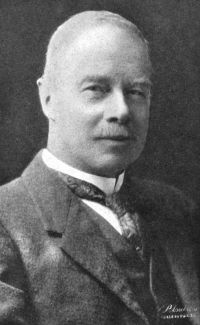
Portrait of George Vernon Hudson George Vernon Hudson An Elementary Manual of New Zealand Entomology… (1892)

It forms a most convenient passage from the insects undergoing a complete metamorphosis with a quiescent pupa, to those which are active during the whole of their life, as the larvæ are widely different from the adults, but the pupæ, although incapable of walking or eating, approximate very closely in structure to the perfect insects.
Source: Wikisource

Portrait of George Vernon Hudson George Vernon Hudson An Elementary Manual of New Zealand Entomology… (1892)

This larva probably lives over a year, its growth proceeding very slowly, but mature specimens are not infrequently met with quite as large as the illustration. When full-grown it leaves the water and forms an oval cell in the mud, usually under a large stone; its gills then gradually shrivel up, and in ten days or a fortnight it is transformed into the curious pupa, shown at Fig. 1b, from which the perfect insect proceeds in about six weeks' time.
Source: Wikisource

Portrait of George Vernon Hudson George Vernon Hudson An Elementary Manual of New Zealand Entomology… (1892)

This insect occurs in the neighbourhood of ponds and streams during the summer. Its larva may be found commonly in the green, slimy weed floating in large masses on all stagnant waters. Being very small it is rather difficult to detect, and is best procured by washing a small quantity of the weed in a saucer of water, when the little insects will be at once seen walking about at the bottom.
Source: Wikisource

Get perspective with Kwize: daily news enlightened by great literature