Summary

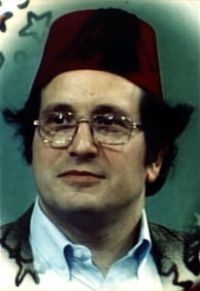
Portrait of Gerald Jay Sussman Gerald Jay Sussman Scheme: An Interpreter for Extended Lambda Calculus (1975)

If we use a pure continuation-passing programming style, then Normal Order and Applicative Order are the same order! In pure continuation-passing no combination is ever a subcombination of another combination. (This is the justification for the fact mentioned above that no clinks are needed if pure continuation-passing style is used.) Thus, if we wish to model iteration in pure lambda calculus without even an if primitive, we can use Normal Order substitutions and express the iteration in the continuation-passing style.
Source: Wikisource

Portrait of Gerald Jay Sussman Gerald Jay Sussman Scheme: An Interpreter for Extended Lambda Calculus (1975)

It turns out that an actor (other than a cell or a serializer) is also a closure. Hewitt [Smith and Hewitt] describes an actor as consisting of a script, which is code to be executed, and a set of acquaintances, which are other actors which it knows about. We contend that the script is in fact identical to the lambda expression in a closure, and that the set of acquaintances is in effect an environment.
Source: Wikisource

Portrait of Gerald Jay Sussman Gerald Jay Sussman Scheme: An Interpreter for Extended Lambda Calculus (1975)

There are many other ways to compute factorial. One important way is through the use of iteration. Consider the following definition of FACT. Although it appears to be recursive, since it "calls itself", it captures the essence of our intuitive notion of iteration, because execution of this program will not produce internal structures (e.g. stacks or variable bindings) which increase in size with the number of iteration steps. This surprising fact will be explained in two ways.
We will consider programming styles in terms of substitution semantics of the lambda calculus (Section 3) .
Source: Wikisource

Get perspective with Kwize: daily news enlightened by great literature