Summary

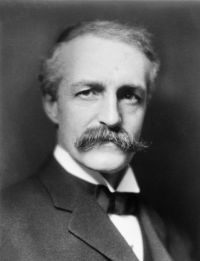
Portrait of Gifford Pinchot Gifford Pinchot The Training of a Forester

Before we can understand forestry, certain facts about the forest itself must be kept in mind. A forest is not a mere collection of individual trees, just as a city is not a mere collection of unrelated men and women, or a Nation like ours merely a certain number of independent racial groups. A forest, like a city, is a complex community with a life of its own. It has a soil and an atmosphere of its own, chemically and physically different from any other, with plants and shrubs as well as trees which are peculiar to it.
Source: Gutenberg

Portrait of Gifford Pinchot Gifford Pinchot The Training of a Forester

What chance does it present for a successful career, for a career of genuine usefulness, and what is the chance to make a living? Is he fitted for it in character, mind, and body? If so, what training does he need? These questions deserve an answer.
To the men whom it really suits, forestry offers a career more attractive, it may be said in all fairness, than any other career whatsoever. I doubt if any other profession can show a membership so uniformly and enthusiastically in love with the work. The men who have taken it up, practised it, and left it for other work are few.
Source: Gutenberg

Portrait of Gifford Pinchot Gifford Pinchot The Training of a Forester

The trained Forester must know the forest as a doctor knows the human machine. First of all, he must be able to distinguish the different trees of which the forest is composed, for that is like learning to read. He must know the way they are made and the way they grow; but far more important than all else, he must base his knowledge upon that part of forestry which is called Silvics, the knowledge of the relation of trees to light, heat, and moisture, to the soil, and to each other.
Source: Gutenberg

Get perspective with Kwize: daily news enlightened by great literature