Professional education

Definition and stakes

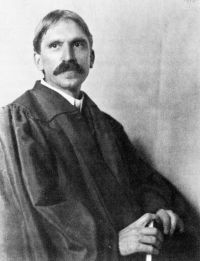
Evelyn Dewey,  Schools of to-morrow

“ The learned professions—divinity, law, and, to a less extent, medicine—were admitted upon suffrance to the sphere of higher education, for the manual element in the service rendered to others was not so great as in industrial pursuits. But professional education was looked upon with disparagement in contrast with a liberal education just because its aim was rendering service to others. ”
Source: Gutenberg

Albert Shaw,  The business career in its public relations

“ But the three oldest and best recognized professions no longer stand alone, in the estimation of our higher educational authorities and of the intelligent public. In a democracy like ours, with a constantly advancing conception of what is involved in education for citizenship and for participation in every individual function of the social and economic life, the work of the teacher comes to be recognized as professional in the highest sense. Teaching, indeed, seems destined in the near future to become the very foremost of all the professions. ”
Source: Gutenberg

1911 Encyclopædia Britannica (1911)

“ Roughly, nine-tenths of elementary education and the education of teachers, over two-thirds of secondary education, and over a third of college and higher technical education are provided and controlled by the public. Professional education, other than the training of teachers and engineers, is still largely a function of private provision and control. ”
Source: Wikisource

Get perspective with Kwize: daily news enlightened by great literature