Summary

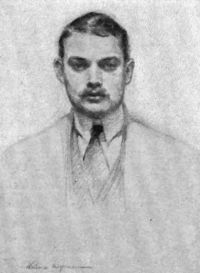
Portrait of Guy Wetmore Carryl Guy Wetmore Carryl Zut and Other Parisians — The Only Son of His Mother (1903)

Do you know what that means, Monsieur le Comte de Villersexel? Do you understand that it is but one ear in millions that is so finely keyed that this minutest deviation could wound it like the most utter discord? And I wounded him, your Pépin. I saw it in his eyes. Therefore I tell you — I, who know — that he is a genius, a genius greater than his mother, and that, like her, he must be my pupil. I have none other now. It shall be the work of my old age to make him the greatest violinist of his day. Give him to me, my friend, if not for his own sake, then for hers!
Pazzini.
Source: Wikisource

Portrait of Guy Wetmore Carryl Guy Wetmore Carryl Zut and Other Parisians — The Only Son of His Mother (1903)

And, at the unwonted tenderness of her question, the floodgates of Pépin’s reserve suddenly gave way. Placing his hands upon the girl’s shoulders, he searched her face with his eyes.
“If there were another violin” — he began, and, faltering, stopped, and turned away to hide the tears that would come, strive as he might to hold them back.
“Did you hear him — and see him?” queried Miss Lys, a minute after, furiously backing Sedgely into a corner by the lapels of his frock coat. “You did — you know you did! And you are still here? Lord! What a man!”
Source: Wikisource

Portrait of Guy Wetmore Carryl Guy Wetmore Carryl Zut and Other Parisians — The Only Son of His Mother (1903)

This portrait of his mother dominated the life of Pépin like the half-remembered substance of a dream. He had known nothing of her in the life, for the breath of being had passed from her lips to his at the moment of his birth, but with the intuition of childhood, he seemed to know that this was one who would have loved him and whom he would have loved.
Source: Wikisource

Get perspective with Kwize: daily news enlightened by great literature