Summary

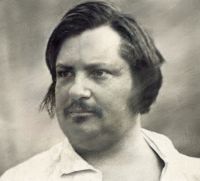
Portrait of Honoré de Balzac Honoré de Balzac The Physiology of Marriage — First Part… (1829)

Can a man ever learn woman and know how to decipher this wondrous strain of music, by remaining through life like a seminarian in his cell? Is it possible that a man who makes it his business to think for others, to judge others, to rule others, to steal money from others, to feed, to heal, to wound others—that, in fact, any of our predestined, can spare time to study a woman? They sell their time for money, how can they give it away for happiness?
Source: Wikisource

Portrait of Honoré de Balzac Honoré de Balzac The Physiology of Marriage — First Part… (1829)

If poetry, music and painting have found infinite forms of expression, pleasure should be even more diversified. For in the three arts which aid us in seeking, often with little success, truth by means of analogy, the man stands alone with his imagination, while love is the union of two bodies and of two souls. If the three principal methods upon which we rely for the expression of thought require preliminary study in those whom nature has made poets, musicians or painters, is it not obvious that, in order, to be happy, it is necessary to be initiated into the secrets of pleasure?
Source: Wikisource

Portrait of Honoré de Balzac Honoré de Balzac The Physiology of Marriage — First Part… (1829)

The most charming contrasts of foliage, the rarest trees, long valleys, and prospects the most picturesque that could be brought from abroad, Borromean islands floating on clear eddying streams like so many rays, which concentrate their various lustres on a single point, on an Isola Bella, from which the enchanted eye takes in each detail at its leisure, or on an island in the bosom of which is a little house concealed under the drooping foliage of a century-old ash, an island fringed with irises, rose-bushes, and flowers which appears like an emerald richly set.
Source: Wikisource

Get perspective with Kwize: daily news enlightened by great literature