Summary

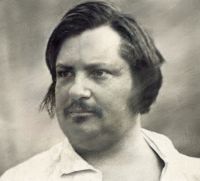
Portrait of Honoré de Balzac Honoré de Balzac The Physiology of Marriage — First Part… (1829)

For in order to be happy, is it not necessary to control the impetuous desires of your senses? Where is the powerful barrier to restrain her, raised by the light hand of a woman whom you wish to please, because you do not possess? Moreover, you have caused your troops to parade and march by, when there was no one at the window; you have discharged your fireworks whose framework alone was left, when your guest arrived to see them. Your wife, before the pledges of marriage, was like a Mohican at the Opera: the teacher becomes listless, when the savage begins to understand.
Source: Wikisource

Portrait of Honoré de Balzac Honoré de Balzac The Physiology of Marriage — First Part… (1829)

Talent in love, as in every other art, consists in the power of forming a conception combined with the power of carrying it out. The world is full of people who sing airs, but who omit the ritornello, who have quarters of an idea, as they have quarters of sentiment, but who can no more co-ordinate the movements of their affections than of their thoughts. In a word, they are incomplete. Unite a fine intelligence with a dwarfed intelligence and you precipitate a disaster; for it is necessary that equilibrium be preserved in everything.
Source: Wikisource

Portrait of Honoré de Balzac Honoré de Balzac The Physiology of Marriage — First Part… (1829)

The married couple who intend to love each other during their whole life have no notion of a honeymoon; for them it has no existence, or rather its existence is perennial; they are like the immortals who do not understand death. But the consideration of this happiness is not germane to our book; and for our readers marriage is under the influence of two moons, the honeymoon and the Red-moon. This last terminates its course by a revolution, which changes it to a crescent; and when once it rises upon a home its light there is eternal.
Source: Wikisource

Get perspective with Kwize: daily news enlightened by great literature