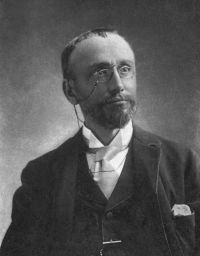
H. C. Bunner

H. C. Bunner

Summary

Portrait of H. C. Bunner H. C. Bunner A Plain Girl (1914)

If Tom saw Mary alone it was at some hour unsuitable for what the French call "expansions." It is difficult for the tender sentiment to expand while the object of a heart's devotion is washing teacups or putting whale-oil soap on rose-bushes. Of Gussie and Annie and both the Berties and the rest of "the preparatories," as they were called, he saw much more than he wanted to—so much, indeed, that much against his will he had to learn their names and their separate identities, and to distinguish one from the other.
Source: Wikisource

Portrait of H. C. Bunner H. C. Bunner A Plain Girl (1914)

Every true lover's fancy outruns his journey to his appointed meeting. Tom had pictured to himself a quiet old-fashioned parlor with green blinds with the slats turned down and vases of flowers variously disposed around and Mary waiting for him in a delightful semi-obscurity, and a subsequent extinction of all the natural laws of time until they two had got through with what they had got to say to each other.
Source: Wikisource

Portrait of H. C. Bunner H. C. Bunner A Plain Girl (1914)

And as for Mary Jones, her situation is even more uncomfortable. By all the laws of affection she is John's ownest own; and yet in reality she isn't anybody's own—not even her own self's own. Her parents have relinquished their claim to her just enough to enable them to go about looking as though she had deserted them in a snow-storm to run away with a disbeliever in revealed religion; and they keep enough authority over her to be as mean as conscientious parents can be whenever they get an opportunity. And few people can be meaner than a truly conscientious parent.
Source: Wikisource

Get perspective with Kwize: daily news enlightened by great literature