Summary

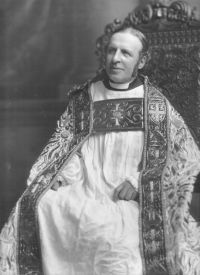
Portrait of H. C. G. Moule H. C. G. Moule The Expositor's Bible: The Epistle of St Paul to the Romans

The eternal Neighbour comes to us, with no frowning look, and shews us His holy demand; to live to-day a life of truth, of purity, of confession of His Name, of unselfish serviceableness, of glad forgiveness, of unbroken patience, of practical sympathy, of the love which seeks not her own. What shall we say? That it is a beautiful ideal, which we should like to realize, and may yet some day seriously attempt? That it is admirable, but impossible? Nay; "we are debtors." And He who claims has first immeasurably given. We have His Son for our acceptance and our life. His very Spirit is in us.
Source: Gutenberg

Portrait of H. C. G. Moule H. C. G. Moule The Expositor's Bible: The Epistle of St Paul to the Romans

We "present ourselves to God," for His ends, as implements, vassals, willing bondmen; and lo, our own end is attained. Our life has settled, after its long friction, into gear. Our root, after hopeless explorations in the dust, has struck at last the stratum where the immortal water makes all things live, and grow, and put forth fruit for heaven. The heart, once dissipated between itself and the world, is now "united" to the will, to the love, of God; and understands itself, and the world, as never before; and is able to deny self and to serve others in a new and surprising freedom.
Source: Gutenberg

Portrait of H. C. G. Moule H. C. G. Moule The Expositor's Bible: The Epistle of St Paul to the Romans

We have had the dream of human merit expelled from the heart with arrows of light; and the pure glory of a grace most absolute, most merciful, has come in upon us in its place. All along we have been reminded, as it were in fragments and radiant glimpses, that these doctrines, these truths, are no mere principles in the abstract, but expressions of the will and of the love of a Person; that fact full of eternal life, but all too easily forgotten by the human mind, when its study of religion is carried away, if but for an hour, from the foot of the Cross, and of the Throne.
Source: Gutenberg

Get perspective with Kwize: daily news enlightened by great literature