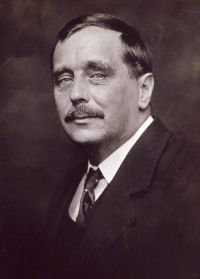
H. G. Wells

H. G. Wells

Summary

Portrait of H. G. Wells H. G. Wells Love and Mr. Lewisham (1899)

Lewisham gave way to a transport of anger. He caught up a handful of roses and extended them, trembling. "What's this?" he asked. His finger bled from a thorn, as once it had bled from a blackthorn spray.
"I didn't take them," said Ethel. "I couldn't help it if they were sent."
"Ugh!" said Lewisham. "But what is the good of argument and denial? You took them in, you had them. You may have been cunning, but you have given yourself away. And our life and all this"—he waved an inclusive hand at Madam Gadow's furniture—"is at an end."
Source: Wikisource

Portrait of H. G. Wells H. G. Wells Love and Mr. Lewisham (1899)

Many a poor weakling have I comforted with Lies, great thumping, silly Lies, about the grave! Compare me with one of those rascals who disseminate phossy jaw and lead poisons, compare me with a millionaire who runs a music hall with an eye to feminine talent, or an underwriter, or the common stockbroker. Or any sort of lawyer. . . .
"There are bishops," said Chaffery, "who believe in Darwin and doubt Moses. Now, I hold myself better than they—analogous perhaps but better—for I do at least invent something of the tricks I play—I do do that."
"That's all very well," began Lewisham.
Source: Wikisource

Portrait of H. G. Wells H. G. Wells Love and Mr. Lewisham

Any more than a railway map will run a train a mile.”
“Eh?” said Lewisham. “Map—run a train a mile—of course, yes. No, it won’t.”
“That is precisely my case,” said Chaffery. “That is the case of your pure knave everywhere. We are not fools—because we know. But yonder runs the highway, windy, hard, and austere, a sort of dry happiness that will endure; and here is the pleasant by-way—lush, my boy, lush, as the poets have it, and with its certain man-trap among the flowers ...”
Ethel returned through the folding doors.
Source: Gutenberg

Get perspective with Kwize: daily news enlightened by great literature