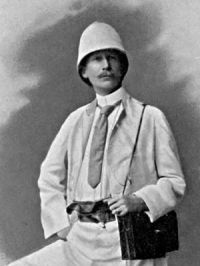
“ The drive to Epsom, when you get well out of London, is sufficiently pretty; but the part of it which most took my fancy was a district preëminently suburban, the classic community of Clapham. The vision of Clapham had been a part of the furniture of one’s milder historic consciousness—the vision of its respectable common, its evangelical society, its rich drab humanity, its goodly brick mansions of the Georgian era. ”
Clapham
Definition and stakes
Clapham, a village and civil parish in Bedfordshire, England, is known for its historical sites, including RAF Twinwood Farm and Clapham Park, as well as its annual folk festivals. Literary references portray Clapham as a symbol of suburban respectability and middle-class life.
Henry James evokes its “rich drab humanity” and Georgian architecture in English Hours, while Constance Holme’s The Trumpet in the Dust sets the village as a backdrop for moral and social tensions, depicting characters like Mrs. Clapham in complex, conflicted roles. P. Austin Nuttall’s Nuttall Encyclopædia positions Clapham as a center of evangelical heritage and bourgeois identity, highlighting its lasting cultural significance.
Quotes about “Clapham”
Constance Holme, The trumpet in the dust (1921)
“ It was Emma who answered her without pause, taking up the gage instantly, and smoothing her own voice still further in order to heighten the contrast with the strident tones.“Eh, now, Martha Jane Fell, you shouldn’t come bursting in like that! ’Tisn’t nice, when folks is in trouble, to come making a stir; and Mrs. Clapham’s heart not what it should be—not by a deal.” ”
Constance Holme, The trumpet in the dust (1921)
“ Would any woman, for instance, with a heart softened either by nature or time, have schemed to keep a mother from her dying child? A fresh wave of sorrow engulfed Mrs. Clapham when she remembered that, but for Emma, she might still have seen Tibbie alive. No, there could be no question now of entrusting the children to her, after that.Her expression changed slowly as she looked steadily at Martha Jane, and for the first time she seemed to resemble the happy Mrs. Clapham of the happy morning.“Nay, Martha Jane,” she said quietly, “I can believe you without that. ”
Constance Holme, The trumpet in the dust (1921)
“ Clapham more uneasy than ever. She had allowed herself that one hit at Tibbie’s mother, that one scratch, so to speak, at Tibbie’s corpse; but when once that fundamental demand of her queer nature had had its way, her whole procedure altered subtly. Her hands ceased to twitch as if she were being torn in twain by some inward strife. Even her colour faded a little, that pronounced flush which seemed to speak of triumph rather than grief, and into her black eyes came an expression which was obviously meant to convey pity.“Nay, now, you can’t think I meant anything against the poor lass!” ”
Constance Holme, The trumpet in the dust (1921)
“ Yet Jemmy—or so at least Mrs. Clapham had been known to insist—would have been right enough but for Emma. He was never a star, of course, either in looks or brains, but he was right enough as men went, seeing that in most cases they didn’t go far. It was hardly credible that he should have turned into the mad skeleton of his later years, peering at people from behind the ferns, or, later still, from a room upstairs. When he wasn’t peering he was emptying water-jugs upon callers’ heads, or throwing things at the passers-by. ”
Constance Holme, The trumpet in the dust (1921)
“ Mrs. Clapham began to wonder whether she wasn’t being merely absurd in trying to take her beautiful day so beautifully. Martha Jane gave her much the same uncomfortable feeling as that curate of Mrs. Tanner’s used to give her in church; the same feeling that she might have had if a clown had been introduced into a Bethlehem Play.“It’s right kind of you, I’m sure,” she replied, as she had already replied right and left, but with none of the usual heartiness in her voice. ”
Various, Harper's New Monthly Magazine, Vol…
“ We become sentimental, and wish we could marry Clapham. The crowd thickens on both sides of the road. All London appears to have come out to see us. It is like a triumphant entry—except that, on the whole, we rather amuse than impress the populace. There are little love-scenes among the chestnut trees by the roadside—young gentlemen in gardens resentful of glances at young ladies from coach-tops—other young gentlemen in other gardens, whose arms, encircling young ladies, seem to be trained like the vines. ”
Constance Holme, The trumpet in the dust (1921)
“ Mr. Baines, as all the village was aware, was hardly the sort to rise up early in order to bathe his face in morning dew. Besides, as she reminded herself again, this enchanting dispensation of Providence could not possibly seem as important to him as it did to her. Why, in the pressure of business he might even forget it—let it stand over, perhaps, until to-morrow! Mrs. Clapham could hardly restrain herself from rushing off to sit waiting for him on his office doorstep when she thought of that. ”
P. Austin Nuttall, The Nuttall Encyclopædia
“ Clapham, a SW. suburb of London, in the county of Surrey, 4 m. from St. Paul's, and inhabited by a well-to-do middle-class community, originally of evangelical principles, and characterised as the Clapham Set.Clapperton, Captain Hugh, an African explorer, born at Annan; bred in the navy, joined two expeditions into Central Africa to ascertain the length and course of the Niger, but got no farther than Sokoto, where he was attacked with dysentery and died (1788-1827) . ”
Constance Holme, The trumpet in the dust (1921)
“ Mrs. Clapham threw at her cheerfully, as she hurried away. “I’ll just have a look round and see what’s what; and if you can spare me a cup o’ tea, I’ll be right glad of it when I’m through.”She left Mrs. Bell still looking longingly after the key, and, turning the corner, arrived at her own door. Michaelmas daisies and asters lined the flagged path at either side, purple, clean-coloured faces not yet touched by the frost; but beside the door itself was what she knew to be a flowering currant, that first flambeau of glory which Nature flings to us in the Spring. ”
Constance Holme, The trumpet in the dust (1921)
“ One said to oneself, “What is it? What is it?” and then knew it to be the feet of the new generation on the road. The patter and clatter of those feet wove themselves into the last of Mrs. Clapham’s dream. She heard the clink of clogged soles, the lighter slither of leather, the whistles and cries of the boys, the running chatter of little girls. And, long after the stream had passed on, it seemed to her that she heard other feet on the hill—the thin little dragging feet of little Libby and Baby Steve.... ”
Constance Holme, The trumpet in the dust (1921)
“ Clapham rejoined humorously. “But you’re likely right. I can’t abide folks to be mooning around or lying about half their time. I like to see a bit of elbow-grease put into life, same as it might be a kitchen-table! I was brought up to think there was nowt like work, and I can’t say I’ve ever found anything better. My Tibbie’s a grand worker an’ all, and yon little Libby of hers shapes to frame the same way.... But folks can’t last for ever and that’s a fact; and I’ve always sworn as I’d end my days in them almshouses on Hermitage Hill.” ”
Edward Thomas,
In Pursuit of Spring
“ A burly flower-girl, a white-haired youth, and a broken-down, long-haired actor or poet, are the only strangers in London I have seen more than once. Yet the combination is familiar. I am a Londoner, and I am at home. But I am not a Clapham Junction man any more than I am a Trowbridge man. Perhaps the reason of my discontent is that there are no Clapham Junction men, that all are strangers and aware of it, that they never truly make a mob like the factory men at New Swindon, [209] and yet are too numerous to be regarded as villagers like the people of Rudge. ”
H. G. Wells,
Love and Mr. Lewisham
“ Lewisham turned over sharply without finishing that page. “My life at Clapham,” continued the letter, “has irked me for some time, and to tell you the truth, the spectacle of your vigorous young happiness—you are having a very good time, you know, fighting the world—reminded me of the passing years. To be frank in self-criticism, there is more than a touch of the New Woman about me, and I feel I have still to live my own life. What a beautiful phrase that is—to live one’s own life!—redolent of honest scorn for moral plagiarism. ”
Constance Holme, The trumpet in the dust (1921)
“ Clapham! ‘’Twouldn’t be fair,’ I says to him, firm but kind, ‘not to go letting her have her chance.’... Almshouses is meant for folks like me, his lordship says,” she went on, the toss of her head infinitely more impressive than anything in that line achieved by Mrs. James—“folks as can’t frame to fight their way. ’Tisn’t everybody as has titles voting for ’em, and coronets shaking hands!” ”
Constance Holme, The trumpet in the dust (1921)
“ The breath that she drew now was not a pretended sigh, but an urgent relief in a moment of fierce strain.“Nay, now, Emma, yon tale won’t wash!” Mrs. Clapham pronounced firmly. “Jemmy was a wastrel—a real nowt—I’ll give you that; but it was you and not him as played Old Harry with Poor Stephen.”“Ay, I know that’s what folks said ... what poor Stephen said an’ all. It’s right hard to have it thrown up agen you when your poor lad’s dead in France!... You’re a mother yourself, Ann Clapham,” she went on, warming to an impassioned tone, “so you won’t need telling what it’s been like! ”
Constance Holme, The trumpet in the dust (1921)
“ I was that keen to know.”“It was right kind of you, Maggie,” Mrs. Clapham beamed; “it was right kind! Good luck doesn’t come every day o’ the week, and when it does, it’d be a queer sort as didn’t want everybody to hear!”Steeped in a mutual kindness that had the warmth of an embrace, they drifted across the fast-drying floor and seated themselves by the small fire. Mrs. Tanner perched herself on the edge of the stiff rocker, while Mrs. Clapham sat in her late husband’s chair, bolt upright, her bare arms outstretched, her plump moist hands resting upon her knees. ”
Constance Holme, The trumpet in the dust (1921)
“ It was real shrewdness of character which had led her to choose for a husband the tamest youth in the place, whom everybody knew now to have been a hero in disguise. And she was so clever with her fingers that each one of them was worth at least the whole of another person’s hand. Young as she was, she had been the village dressmaker par excellence before she married Stephen Catterall, and Mrs. Clapham’s memories of Tibbie’s youth were always shot through by the colours in which she had worked. Her bright head, gleaming about the cottage, had always a background of coloured cottons and silks. ”
Kate Dickinson Sweetser, Boys and Girls from Thackeray
“ He has done me and Hannah, too. Mr. Speck, the artist, says he is a wonder at drawing.Our little Clive has been to London on a visit to his uncles and to Clapham, to pay his duty to his step-grandmother, the wealthy Mrs. Newcome. She was very gracious to him, and presented him with a five pound note, a copy of Kirk White's poems and a work called Little Henry and his Bearer, relating to India, and the excellent catechism of our Church. Clive is full of humour, and I enclose you a rude scrap representing the Bishopess of Clapham, as Mrs. Newcome is called. ”
Constance Holme, The trumpet in the dust (1921)
“ Clapham lifted her glance to the hard little face. Emma’s eyes were certainly bright, and her cheeks flushed, but she hardly looked as if she had been giving way to turbulent grief.“Of course, you might say it was a deal worse for me when my poor lad was killed in France, but there was things to make up for it, all the same. There was glory, and folks taking off their hats, and all suchlike, as his lordship said. But there isn’t anything cheering o’ that sort when folks die same as Stephen’s wife.” ”
Constance Holme, The trumpet in the dust (1921)
“ Emma’s glance left her neighbour’s face and rose to the mantelpiece, where Poor Stephen, in khaki, looked from a silver frame. Mrs. Clapham’s glance followed suit, and it seemed to her that the sad eyes shifted as the mother’s gaze came up.... She had winced again at Emma’s last words, and begun her usual rubbing of knees. In common with many women during the Great War, she had felt ashamed of not owning a son to add to the general loss. Stephen and Tibbie had done their best to make her feel that Stephen was really hers, but there was no getting past the fact that he was really Emma’s. ”
Charles J. Abbey, The English Church in the Eighteenth Century
“ The two Thorntons, father and son, William Wilberforce, Lord Dartmouth, Lord Teignmouth and others, who regularly or occasionally attended the ministry of John Venn, the worthy Rector of Clapham, were called in derision, 'the Clapham sect.' The phrase implies a sort of reproach which was not deserved. These good men had no desire to form a sect. They were all, in their way, loyal sons of the Church of England, content with her liturgy, attached to her doctrines, and ready to conform to her order. ”
Constance Holme, The trumpet in the dust (1921)
“ Mrs. Tanner broke into a fresh series of excited chirps, and for the second time the years fell away from Martha Jane. Mrs. Clapham, however, uttered a sharp sigh, as if aware that repeated drama on this scale was hardly the thing for a doubtful heart; and Emma behind her neither chirruped nor sighed, but again unfolded her arms and let them hang by her sides.Mr. Baines had suddenly appeared at the bottom of the street on the way to his office, holding a skipping little girl by a fatherly hand. He was a well-dressed, pleasant-looking man, with a buttonhole and a smile ”
Constance Holme, The trumpet in the dust (1921)
“ I don’t know as she’ll take to it just at first—being a lady and all that; but there, I reckon she knows her own business best.... She isn’t as young as she was, neither, and folks as works over hard wear out ter’ble fast. Ay, she’ll get t’ house, will Ann Clapham; there’s no doubt about that.”There was another uncomfortable pause when she had finished, and Mrs. Clapham cast an uneasy glance at her over her shoulder. What Emma was saying sounded all right—at least, for Emma—so she was at a loss to understand why it should fill her with apprehension. ”
Bernard Capes, Where England sets her feet: a romance (1918)
“ And Brion himself? In truth the novel interests which this enterprise had brought him were small compensation for the emotional experiences he had had to suffer in their course. London, for all her promise, had given him but derision and disappointment—a hate, perhaps, dispelled, but a bright illusion darkened; a new serenity won, but an old sorrow made more sorrowful. Yes, he was better back among his moors and streams and lonely hills. One day before they left they rode over to Clapham to pay a visit, which the young man reproached himself with having already delayed to make too long. ”
Constance Holme, The trumpet in the dust (1921)
“ Clapham thought, with a shiver, and possibly pretending to herself that they had suddenly been re-filled....Seated uneasily in her chair, she hardly knew where to turn, for, repugnant as she always found it to look at Emma, it was even more distressing to look at the room. It was always something of a trial to her to go into other folks’ “spots,” because they so seldom came up to her personal standard. More than once, when calling upon a sick neighbour, she had scrubbed the house from ceiling to floor ”
Constance Holme, The trumpet in the dust (1921)
“ Clapham said nothing, but her mouth dropped at the corners like that of a disappointed child, and behind her Emma lifted her arms and folded them slowly again across her waist....“I always said he’d bring it himself!” Mrs. James’s voice was happy and high. “Not because of the stamp and suchlike rubbish—Mr. Baines ain’t the sort to stick at a stamp—but because he’s a gentleman and likes everything just so. Folks can’t be more than gentlemen, nohow,” she finished, glaring at Martha Jane, “even if they do happen to be lordships an’ all!” ”
Constance Holme, The trumpet in the dust (1921)
“ The staring women sprang to attention at once, and, with the help of the butcher, began a search. It was Mrs. Bell who finally pounced on it where it lay, flown from the charwoman’s hand in the track of the butcher’s wheels.“Happen you’ll agree now as it’s safest with me!” she demanded grimly, and pocketed it as the other nodded.... “Ay, I can’t say I seem fit to be trusted with it at present!” Mrs. Clapham agreed, though with an inward sigh, and feeling as if, with the loss of the key, something vital had been taken from her. “Now I’ll be getting up again, if you’ll lend me a hand.” ”
Constance Holme, The trumpet in the dust (1921)
“ Mrs. Clapham muttered “Nay, now, Emma—nay, now, nay!” putting up a heavy hand; but already the words had had their desired effect. The Chorus drew away from about Martha Jane like a single soul, testifying to their personal worth by exclamations and looks of disgust. (Mrs. James remarked later that she had noticed a smell of drink—a really refined person couldn’t miss it—but there, since the War there had been so little of it about, only them as fair lived for it could believe when they happened across it!) “Yon lordship o’ yours’ll be rarely set up when he hears tell about it!” ”